Best Racquetball Racquet Reviews of 2024

best racquetball racquet

Racquetball is a fun, fast-paced racquet sport that can be enjoyed by players of all ages. Whether you’re just starting out, or you’ve been playing for years, it’s important to have the right racquetball racquet to help you play your best.

In this article, we’ll take a look at the best and most popular racquetball racquets for beginner, intermediate and advanced players. We’ll also discuss key factors to consider so you know exactly how to choose a racquetball racquet. We also provide some tips on how to select the right racket for your individual playing style.

So, whether you’re looking for your first racquetball racquet, or you’re in the market for an upgrade, read on for the best beginner, intermediate and advanced racquets, as well as the best cheap racquetball racquet available today.

Best Racquetball Racquets

As racquetball players ourselves, we understand that choosing a Racquetball racquet is one of the most important decisions any racquetball player can make.

Choose the right racket and you can take your game to a whole new level. Choose the wrong racquet and you’ll feel like you’ve taken 10 steps back. Whether you’re a total newbie to the sport of racquetball and you want to get started in the best way possible or you’ve been playing for a while and feel like you’ve outgrown your current racquet, choosing the best racquetball racquet for your needs is very important.

We aim to help you make the right choice of racket by reviewing the best racquetball racquets on the market today. We personally tested all the racquets on our list, which is why we can personally recommend them to you.

Some of these rackets have been around for a while but their popularity with players have shown that they deliver what players need on the court time and time again.

BEST RACQUETS

RACKET NAME

RACKET IMAGE

BEST BEGINNER RACQUETBALL RACQUET

Wilson Striker Racquetball Racquet

BEST RACQUETBALL RACQUET FOR INTERMEDIATE PLAYER

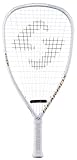
Gearbox GB 250 Feather 165 Quad Racquetball Racquet

BEST RACQUETBALL RACQUET FOR ADVANCED PLAYER

Ektelon 03 Black 175 Racquetball Racquet

BEST CHEAP RACQUETBALL RACQUET

HEAD MX Fire Racquetball Racquet

Best Beginner Racquetball Racquet

Wilson Striker Racquetball Racquet Review


N/A


CHECK PRICE

Wilson Striker Specifications

Unstrung Weight: 205g

Strung Weight: 221g

Swing Weight: 152

Swing Weight Rating: Medium = Power and Control

Balance: Even Balance

Head Size: 107 square inches / 690 square centimeters

Construction Material: Aluminum Alloy

Wilson Striker Review

In terms of value for money, the Wilson Striker racquetball racquet is an excellent entry-level racquet aimed at players just getting started in the game.

The frame is made of a heat-treated aluminum alloy that is designed to accommodate beginners with still developing techniques and who often mishit the ball during rallies.

The Wilson Striker racquetball racquet is heavier than most. This racquet weighs over 200 grams unstrung, making it a good choice for hard hitters who enjoy relaxing at the baseline and letting the racquet handle the bulk of the work.

With its even balance and medium swing weight rating, the Wilson Striker racquet offers a good combination of power and control. For a newcomer to the sport, this is exactly what he or she needs.

The Wilson Striker has a V-matrix frame, a technology which increases the sweet spot of the 107 square inch head.

At times when I did not hit the ball perfectly, I found that accuracy and power were maintained due to the racquet’s relatively large sweet spot.

Despite playing for extended periods of time, I found the grip to be comfortable to hold and play with.

This racket weighs over 220 grams when strung, which may be too heavy for some players. The increased weight, however, will increase power, allowing the swing to be made with a minimum amount of effort. The downside is that your arm may tire out faster when playing long rallies due to the extra weight.

Wilson Quality

Since 1915, Wilson has manufactured tennis racquets, and they are the official brand for USA Racquetball tournaments. This gives you peace of mind that they produce quality racquetball racquets.

In comparison to other beginner rackets, this racket is incredibly affordable and very easy to use. This is why the Wilson Striker racquetball racquet is our recommendation for the Best Beginner Racquetball Racquet.

CHECK PRICE


Best Racquetball Racquet For Intermediate Player

Gearbox GB 250 Feather 165 Quad Racquetball Racquet Reviews

N/A


CHECK PRICE

Gearbox GB 250 Feather 165 Specifications

Unstrung Weight: 165g

Strung Weight: 182g

Swing Weight: 155

Swing Weight Rating: Medium = Power and Control

Balance: Head Heavy

Head Size: 106 square inches / 684 square centimeters

Construction Material: Graphite

Gearbox GB 250 Feather 165 Review

The Gearbox GB 250 Feather Quad racquetball racquet is a great option for all player types, however intermediate players will benefit the most from this racquet.

A number of the Gearbox GB 250 Feather’s features encourage control, while others focus on producing power for your shots with less physical effort.

The racquet’s weight is classified as a light racquet, enabling excellent manoeuvrability and control.

The weight of this racquet is balanced in order to create a head-heavy racquet. The Gearbox GB 250 Feather compensates for the lack of power that a light weight racquet racquet provides by putting most of its weight at its head. The momentum generated by the head heavy balance generates its own force and power. So it basically adds power to a control game.

The swing weight of the Gearbox GB 250 Feather 165 Quad racquetball racquet is 155 kg x cm² which means it falls into the category of a medium swing weight racquet. I found the swing weight had a good balance between control and power while I was using it on the court.

The head of the racquet is a pretty standard 106 square inches.

When using this racquet I found the Quadraform head shape and light and easy-to-maneuver graphite frame material enhanced my control of the ball.

Quadraform racquet heads offer a large sweet spot and a focus on control over power.

When using this racquet I could understand how the head shape is designed for control, while it was obvious that the frame incorporates technology and design to maximize power.

Durable

In order to make the frame of the racquet as solid as possible, it is primarily made up of high modulus premium graphite.

Graphite is a lightweight and durable material commonly found in high quality racquetball racquets such as the Gearbox GB 250 Feather 165 Quad.

The Gearbox GB 250 Feather 165 racquetball racquet is our choice for the best racquetball racquet for the intermediate player who wants a good balance between control and power.

With its light weight construction, medium swing weight, its Quadraform head shape which has a head heavy balance, and its comfortable grip you can’t go wrong choosing this racquet.

CHECK PRICE


Best Racquetball Racquet For Advanced Player

Ektelon 03 Black 175 Racquetball Racquet Review


N/A

CHECK PRICE

Ektelon 03 Black 175  Specifications

Unstrung Weight: 175g

Strung Weight: 189g

Swing Weight: 142

Swing Weight Rating: Medium = Power and Control

Balance: Head Heavy

Head Size: 106 square inches / 684 square centimeters

Construction Material: Graphite

Ektelon 03 Black 175 Review

The Ektelon O3 Black racquetball racquet is a popular choice among players, which is why we decided to review it for our readers. It features Ektelon’s O3 technology, which refers to the large O-ports on the frame that enhance maneuverability and provide a more aerodynamic design. I found that the O3 Black has a good balance of power and control. It allowed me to generate powerful shots while maintaining accuracy.

The racquet’s lightweight design made it easy to maneuver, allowing for quick reaction times and improved shot placement. I also found that the Ektelon O3 Black has a good amount of stiffness, providing solid power and stability.

Apparently Ektelon’s graphite resin bonding process makes the Ektelon O3 Black 175 Racquet as durable and impact-resistant as possible. I only made contact with the court wall on a limited number of occasions, but I found that no damage was caused to the racquetball racquet at those times. Longer use of the racquet would give a better idea of it’s durability.

As a result of the large O-Ports, the sweetspot is bigger, the response is quicker, and there is more power because the strings seem to move more along the edge of the frame.

I really appreciated the racquet’s large sweet spot, which helped to minimize off-center hits and provided a consistent feel. The Ektelon O3 Black’s design also seems to help reduce vibrations, which made it very comfortable during gameplay.

Overall, the Ektelon O3 Black racquetball racquet is highly recommended by me for its combination of power, control, and maneuverability. It is suitable for players of various skill levels and offers a comfortable and consistent playing experience.

CHECK PRICE


Best Cheap Racquetball Racquet

HEAD MX Fire Racquetball Racquet Review

N/A

CHECK PRICE

HEAD MX Fire Specifications

Unstrung Weight: 190g

Strung Weight: 207g

Swing Weight: 140

Swing Weight Rating: Medium = Control and Power

Balance: Head Heavy

Head Size: 107 square inches / 690 square centimeters

Construction Material: Alloy/Metallix

HEAD MX Fire Review

The HEAD MX Fire racquetball racquet is our choice for the best cheap racquetball racquet because of it’s very reasonable budget friendly price and it’s good overall performance. 

The HEAD MX is 190g unstrung which puts it in the heavy weight category of racquetball racquets. When I was playing with this racquet the heavy weight was a definite advantage from a control perspective. I was able to play my shots with minimal effort and was able to control the ball easily off the racquet without trying to swing the racquet too hard.

The swing weight of the MX Fire is 140 kg x cm² puts it in the light swing weight category, but I must say that it felt more like a medium swing weight racket to me with great control and some power.

I felt that the head heavy balance of the HEAD MX Fire is what gave me the extra power that this heavy racquet might have lacked otherwise, which is one of the reasons why I chose this racket as the best cheap racquetball racquet. It gives you both control and power. This is ideal for beginner and intermediate racquetball players.

The head size is a standard 107 square inches which is big enough to put that heavy frame into use. The only complaint is the fact that a heavy racket with a head heavy balance such as the HEAD MX Fire isn’t the best option if you tend to have long rallies. You need to understand that your forearm, arm and shoulder will get fatigued during a long game. Just finish the points quickly ;-)

HEAD Quality

Cheap racquetball racquets are often an expensive option in the long run because cheap construction materials don’t tend to last long before they break. With HEAD using it’s trademarked  alloy/Metallix construction, this is not a problem with the MX Fire. Carbon fibers and crystalline metal alloy are combined in a specially designed matrix which makes this racquet very strong and durable.

After testing a number of cheap racquetball racquets I settled on the HEAD MX Fire as the best cheap racquetball racquet because in this very inexpensive racket you have a racquet that gives you control and power in a very durable frame. It’s an ideal option if you’re on a tight budget or if this is your first racquet and you don’t want to break the bank while you’re figuring out what playing style you are best at.

CHECK PRICE


How To Choose A Good Racquetball Racquet

Selecting a racquetball racquet that’s perfect for your own personal preferences requires considerable thought and effort. But before picking that perfect Racquetball racquet, you need to know what to consider when choosing a racquet. In this section of the article we’ll discuss some of the factors you should consider when choosing a racquetball racquet, such as weight, balance, and grip size, among other things. And finally, we’ll give you a few tips on how to choose the right racquet for your playing style.

Choosing A Racquetball Racquet Weight

The three weight classes of racquetball racquets are Heavy, Medium, and Light. Below I’ll describe which weight class of racket suits what type of racquetball player. This is the first factor to consider when choosing a racquetball racquet, but is very important to not only help your overall game but also prevent injuries.

racquetball weightHeavy Racquetball Racquet (Unstrung over 185g)

Choose a heavy racquet if you want more control or have a slow swing.

In most cases, these players are relatively new to the sport. Additionally, they include veteran players who have transitioned from power-intensive games to a more controlled style of play.

The heavier the racquet, the more power you will generate without having to swing as hard. A heavy racquetball racquet may be a great choice if you lack a strong swing, are older, or are more concerned with accuracy than power. Also, since they don’t require you to swing hard while you play, they’re preferred by those who care more about ball placement and control.

If you have an arm or shoulder issue, a heavy racquet will also be a better choice since you won’t need to swing your arm as hard when playing your shots.

Medium Racquetball Racquet (Unstrung 170-185g)

You should choose a medium racquet if you’re just starting out or have a moderate swing.

These are the types of players most commonly encountered. This category includes tournament players as well as weekend warriors looking to get a little more from their game.

Most casual players use medium-weight racquets. Generally, they give you a good balance of power and control. Choosing this racquetball racquet weight is probably the safest option if you’re new to the game. In the future, once you know what your preferred playstyle is, you can always upgrade to a lighter or heavier racquet.

Light Racquetball Racquet (Unstrung 150-165g)

Choose a light racquet if you have a fast swing.

Designed to maximize maneuverability, these racquets cater to players who generate their own power. Having a lighter racquet will make maneuvering and swinging it faster easier. For those who like to whack the ball as hard as possible, a lighter racquet is a better choice. Due to its light weight, it won’t tire you out during matches. This is one of the reasons why many professional players choose lighter racquets.

A lighter racquet doesn’t give you more power. It will, however, make it easier to hit the ball hard without it flying everywhere. Staying accurate will be difficult if you swing hard with a heavy racquet.

A light racquet should not be used if you have any kind of arm or shoulder injury. You will be less likely to throw out your arm when you use a heavy racquet, and your elbows will feel more comfortable with the heavier weight.

Determine The Desired Racquetball Racket Balance Point

Racquetball racquets can be classified as head-heavy, even balanced, or head-light, just like in many other racquet sports.

Depending on the weight distribution, a racket’s balance can be evenly distributed or shifted more towards the head or grip. The center of gravity for a racket (static balance point) is measured in millimeters or inches from its butt end.

The racket is considered head heavy if the balance point is closer to the head, and head light if it is closer to the grip. Weight typically centers around the throat of a racket if it has an even balance.

Even Balanced Racquetball Racquets

The balance point of an even balance racket is usually eleven inches from the bottom of the handle. This type of racket offers the maneuverability of a head-light racket with the power of a head-heavy racket.

Even balanced racquets are suitable for new or versatile players.

An even balance racquetball racquet has a good balance between power and control. This is the type of racquet to try if you are not sure which balance racquet you want or if you generally play a versatile type of game.

When the balance is not listed on the racquet, such as “head-heavy” or “head-light”, it’s safe to assume that the racquet is even balanced.

racquetball racquet balance pointHead-Light Racquetball Racquets

A head-light racquetball racquet has a center of gravity below 11 inches (28 cm) from the bottom of the handle.

If accuracy is your top priority, choose a head light racquet.

A head light raquetball racquet will feel lighter than it actually is, and it will be easier to maneuver these racquets quickly. This is an excellent option for control players or those who like to play off the front court.

Those who use a lot of wrist-snap to hit the ball may prefer the feel of these racquets. You will also get more pop out of your wrist because of the lower center of gravity.

Head-Heavy Racquetball Racquets

Weight is distributed towards the top of the head-heavy racquet. This results in a higher center of gravity than 11 inches (28 cm) from the handle’s butt.

If you want to dominate your opponents with power play, you should get a head heavy racquet.

The head-heavy racket increases swing speed and momentum to generate more power.

It means that when you hit the ball, it will fly off the strings. It’s a good choice if you prefer a power-focused game and don’t mind losing some maneuverability.

Their power can be a great advantage for players who like to play powerfully from the back of the court. As a way of compensating for their lack of power, light rackets are often head-heavy.

Determine The Ideal Racquetball Racquet Swing Weight

Swing weight for racquetball racquets, expressed in grams, is determined by measuring the weight of the racket in relation to its length, balance, and head size. It measures the weight of a racket when swung. As the number decreases, it becomes easier to swing and more maneuverable. It is harder to swing a racket with a higher swing weight, but it is more stable on impact.

High Swing Weight(160+) For High Power

Power is generated with the least amount of effort or swing speed with higher swing weight racquets. A power player often drives from the backcourt and hits pass shots and down the line shots. In addition, many new players are in this category since they have not yet learned how to control the ball or determine the angles on the court.

racquetball racquet swing weightMedium Swing Weight(150-160) For Control And Power

A medium swing racquetball racquet is the easiest swing weight for any player to use. The majority of these racquets are around an even balance with a head-light or head-heavy bias of +/- 2 points. A balanced player is able to utilize both passing power and touch placement to their advantage at any given point in a game.

Low Swing Weight(less than 150) For Control

A low swing weight racquet has less momentum during the swing, making quick shot adjustments and soft touch shots easier. It is more common for control players to attack the front wall and to rely on strategic ball placement to defeat their opponents. To keep their opponents off-balance, this type of player uses more lobs, ceiling balls, and pinches.

Choose Your Racquetball Racquet Grip Size

You will have better control over your racquet if you have a good grip size. If your grip is too small, the racquet will twist in your hand and eventually cause Tennis Elbow. It is possible to develop Tennis Elbow from prolonged overuse of a grip that is too large, which would decrease wrist snap on serves.

A grip that is too small is easier to build up than modifying one that is too large. When in doubt, go with the smaller size.

The grip size of a handle is measured by its circumference in inches. Generally, racquetball racquet grip sizes range from small (3 5/8″), which is suitable for most players, to large (3 7/8″ or 3 15/16″), which is suitable for larger hands.

What is the best grip size for you? Players with a smaller grip usually have a faster wrist action, resulting in more power. Unfortunately, the racquet might have a tendency to twist without much palm on the handle, making it difficult to control.

Generally, a larger grip allows for more contact between the hand and the racquet. This allows for better feel and more control. It is possible that there is less power because of a lack of racquet head speed, which can be detrimental for some players.

Guidelines

Choosing the right grip size for you is truly a matter of personal preference, but here are a few general guidelines.

It is recommended that your ring finger touches your palm when gripping your racquetball racquet handle. Your glove size is another way to determine your grip size. The larger grip might be more comfortable if you wear a large or X-large glove.

Another way to determine personal preference is to grasp the racquet handle firmly, but not too firmly. Then close your eyes and swing your wrist back and forth without moving your arm. Increase the wrist speed gradually, but never to full speed, and experiment with various grip sizes to get a sense of the overall feel.

Choose A Reputable Racquetball Racquet Brand

There are so many racquetball racquets to choose from right now. Players just starting out in the sport of racquetball often want to spend as little as possible on a new racket. The temptation is to choose the cheapest possible racquet, even if you’ve never heard of the brand or it’s not got a good track record of quality sports equipment. Inferior materials and manufacturing processes often result in these types of racquets breaking very easily or giving a bad playing experience. This is why it’s a good idea to buy a racquetball racquet that is made by a reputable brand.

Best Racquetball Racquet Brands

The best racquetball racquet brands are HEAD, Wilson, Gearbox, E-Force, Pro Kennex, Python and Macgregor. If you choose racquetball racquets from these brands then you’re assured a quality product. 

Stick To Your Budget

Racquetball racquets range in price from as little as $30 for a basic beginner racket to well over $200 for a more high end racquet. Before you take into consideration all the factors we listed above in choosing the best racquet for you, it’s important to set your budget upfront and sticking to it.

If you are disciplined in sticking to your budget, then it’s a great way of eliminating rackets that exceed your budget and so narrowing your choices down. In these uncertain economic times it’s also a good way of not overspending and ensuring that you have enough money in the bank(or credit card) to cover your monthly expenses.

Will A New Racquetball Racquet Make A Difference?Will a new racquetball racquet make a difference

If you’re an avid racquetball player, you’re probably always looking for ways to improve your game. One way you might consider doing so is by investing in a new racquetball racquet. But will a new racquet really make a difference in your performance on the court? Let’s explore the potential benefits and drawbacks of upgrading your equipment. First and foremost, it’s important to note that a new racquetball racquet won’t automatically make you a better player. It’s still up to you to put in the time and effort to improve your skills through practice and training. However, a new racquet can offer several advantages that may help you play better.

Benefits

One potential benefit of a new racquet is improved power. Newer racquets are often designed with new materials and technology that can enhance the amount of power you can generate with each hit. This can be especially helpful if you’re playing against a skilled opponent who is able to return your shots with ease. A more powerful racquet can give you an edge by allowing you to hit the ball harder and with more force.

Another advantage of a new racquet is increased control. As with power, newer racquets often have better technology and materials that can help you control the ball more accurately. This can be particularly important if you’re trying to hit specific areas of the court or execute difficult shots. A more precise racquet can help you make those shots with greater accuracy and consistency.

In addition to power and control, a new racquet can also offer greater comfort and reduced risk of injury. Older racquets may be worn down or have outdated materials that can cause discomfort or strain on your wrist, elbow, or shoulder. A new racquet with modern materials and design may be more comfortable to use and less likely to cause injury or strain.

Drawbacks

There are some potential drawbacks to investing in a new racquet. For one, it can be expensive. Depending on the brand and model you choose, a new racquet can cost several hundred dollars. If you’re on a tight budget, buying a new racquet may not be feasible.

Another potential drawback is the adjustment period that comes with using a new racquet. Even if you’re upgrading from an older model of the same brand, the new racquet may have different weight, balance, and other factors that can affect your play. It may take some time to get used to the new racquet and adjust your playing style accordingly.

So, will a new racquetball racquet make a difference in your game? The answer depends on a variety of factors, including your skill level, playing style, and budget. If you’re looking to improve your power, control, and comfort on the court, investing in a new racquet may be worth considering. However, it’s important to weigh the potential benefits against the cost and potential adjustment period involved in upgrading your equipment.

How Long Do Racquetball Racquets Last?

Whether you’re a beginner or an experienced player, owning a good racquetball racquet is essential to your success on the court. But, just like any other sports equipment, racquetball racquets have a lifespan. So, how long do racquetball racquets last? The truth is, there is no one-size-fits-all answer to this question. The lifespan of a racquetball racquet largely depends on several factors, including the frequency of use, the level of care and maintenance, and the quality of the materials used in the racquet’s construction.

Frequency of Use

One of the main factors that affect the lifespan of a racquetball racquet is how often it is used. If you’re a frequent player who plays several times a week, your racquet is likely to wear out faster than someone who only plays once a week. This is because the more you play, the more stress and pressure your racquet will be subjected to, which can cause it to break down over time.

Level of Care and Maintenance

Another critical factor that affects the lifespan of a racquetball racquet is the level of care and maintenance it receives. If you’re someone who takes good care of your racquet, cleaning it after each use, storing it in a protective case, and avoiding hitting it against hard surfaces like walls or floors, your racquet will likely last longer than someone who neglects their racquet.

Quality of Materialshow long do racquetball racquets last

Finally, the quality of the materials used in the racquet’s construction is another factor that affects its lifespan. Higher quality materials, such as high-grade graphite and titanium, are more durable and less likely to break down over time than lower quality materials like aluminum or composite materials.

So, how long can you expect your racquetball racquet to last? On average, a racquetball racquet can last anywhere from one to five years, depending on the factors mentioned above. However, with proper care and maintenance, some racquets can last even longer than that.

To ensure that your racquetball racquet lasts as long as possible, it’s essential to take good care of it. This includes cleaning it after each use, storing it in a protective case, and avoiding hitting it against hard surfaces. Additionally, it’s a good idea to have your racquet inspected by a professional every year or so, to ensure that it is still in good condition and doesn’t need any repairs.

In conclusion, the lifespan of a racquetball racquet largely depends on several factors, including the frequency of use, the level of care and maintenance, and the quality of the materials used in the racquet’s construction. By taking good care of your racquet and investing in a high-quality racquet in the first place, you can ensure that you get the most out of your investment and enjoy many years of fun and success on the racquetball court.

Can You Use A Tennis Racquet For Racquetball?

Tennis and racquetball are two popular sports that have many similarities, but also some key differences. One of the questions that often arises is whether you can use a tennis racquet for racquetball. In this blog post, we’ll explore this topic in detail and provide you with all the information you need to know.First, let’s discuss the similarities and differences between tennis and racquetball. Both sports involve hitting a ball with a racquet, but the balls and racquets used are different. Tennis balls are larger and less dense than racquetballs, and tennis racquets are typically longer and have a larger head size than racquetball racquets. Racquetball also has different rules and court dimensions compared to tennis.

Now, let’s answer the question: can you use a tennis racquet for racquetball? The short answer is yes, you can technically use a tennis racquet for racquetball. However, it’s important to note that using a tennis racquet for racquetball may not provide you with the best results.

Negatives

  • Racquetball racquets are designed specifically for the sport of racquetball. They are typically shorter and have a smaller head size than tennis racquets, which allows for better maneuverability and control in the smaller racquetball court. Using a tennis racquet in racquetball may make it more difficult to hit the ball accurately and control it properly.
  • Racquetball balls are also different from tennis balls. Racquetballs are smaller, denser, and have less bounce than tennis balls. Using a tennis racquet with a racquetball may make it harder to generate the required power to hit the ball effectively.
  • Racquetball requires a different set of skills compared to tennis. While both sports involve hitting a ball with a racquet, racquetball requires quick reflexes, fast footwork, and the ability to make split-second decisions in a confined space. Using a tennis racquet in racquetball may not allow you to develop the necessary skills to excel in the sport.

In summary, while you can technically use a tennis racquet for racquetball, it may not be the best option. Racquetball racquets are designed specifically for the sport and provide better control and maneuverability in the smaller court. Racquetballs are also different from tennis balls, which may make it harder to hit the ball effectively with a tennis racquet. Finally, racquetball requires a different set of skills compared to tennis, and using a tennis racquet may not allow you to develop the necessary skills to excel in the sport.

If you’re serious about playing racquetball, it’s recommended that you invest in a proper racquetball racquet and practice using it regularly. This will allow you to develop the necessary skills and enjoy the sport to its fullest potential.

Conclusion

This article is meant to help racquetball players choose a new racquet. If you’re brand new to the sport of racquetball then it’s important that you start your racquetball journey in the best possible way. This is exactly why we tested numerous racquetball racquets until we found the racket that provides the best features that would suit a beginner player’s playing style. We did exactly the same thing when testing racquets to find the best racquetball racquet for an intermediate player. To find the best cheap racquetball racquet we chose the best racket that was reasonably priced, but could be used by beginner to intermediate racquetball players who wanted to enjoy themselves on the court.

We also wanted to arm you with the information you need. Its so that you know how to choose a good racquetball racquet. Personal preference is important, but knowing what factors to consider when choosing a racquetball racquet is incredibly valuable. It’s very important that you choose the right Raquetball Equipment, so take a look at our article where we give you the most comprehensive list, with recommendations, of all the Racquetball Equipment you will ever need. Also, take a look at our detailed reviews of the Best Racquetball Goggles and the Best Racquetball Shoes.

If you want answers to your most burning Racquetball Questions then take a look at our Racquetball Page.

If you have found this information helpful or want to comment on the article please let us know.

Best Yonex Badminton Racket Reviews

best yonex badminton rackets

Yonex is undoubtably the most popular Badminton racket brand in the world right now. With so many different Yonex rackets to choose from, how do you choose the best Yonex badminton racket for you?

Finding the right Yonex badminton racquet for your needs may seem daunting at first. Choosing a racket from Yonex can be challenging since there are so many to choose from. 

The purpose of this article is to help you make an informed decision about the best Yonex Badminton racket for your particular needs. 

It’s important for you to know what factors you should consider when choosing a Badminton racket. Firstly, I begin the article by giving you very helpful information on my top 10 Yonex Badminton rackets. I personally tested the 10 most popular Yonex rackets currently on the market and I give you my opinion on each Yonex Badminton racket.

I tell you which is the best beginner to intermediate Yonex badminton racket, which is the best intermediate to advanced Yonex badminton racket, which is the best budget Yonex badminton racket and which is my least favorite Yonex badminton racquet on the list. You won’t get the same information you find everywhere else as I avoid just rehashing the manufacturers marketing hype, but rather give you the information about the racket based on my experiences while testing it.

Once you’ve gone through the information on the best 10 Yonex Badminton rackets, I explain what factors you need to consider when you choose any Badminton racket, so you know exactly how to choose the best Badminton racket for you needs.

Then I talk about the different types of Badminton racket balance points; namely head heavy, head light and even balance rackets and how these different racket balance points are suited to different styles of play. After this I explain how a Badminton racket’s stiffness rating and weight needs to be considered and why these factors are important when choosing a badminton racket. 

Hopefully, you’ll find this article helpful in choosing the best Yonex badminton racket for your game. Once you understand the different Yonex Badminton rackets, then it’s about deciding which racket suits your game.

10 Best Yonex Badminton Rackets

Now that you know the factors to consider when choosing a Badminton racket, let’s take a look at the 10 most popular Yonex Badminton rackets on the market today, which I’ve tested for you. These are all great Badminton racquets, so I’m sure you’ll find one that will take your Badminton game to the next level.

BEST AND WORST PICKS

RACKET NAME

RACKET IMAGE

BEST BEGINNER TO INTERMEDIATE YONEX RACKET

 
N/A

BEST INTERMEDIATE TO ADVANCED YONEX RACKET

N/A

BEST BUDGET BEGINNER YONEX RACKET

WORST YONEX RACKET ON THE LIST

N/A

OTHER TOP YONEX RACKETS ON THE LIST

N/A
N/A
N/A
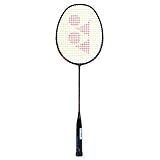
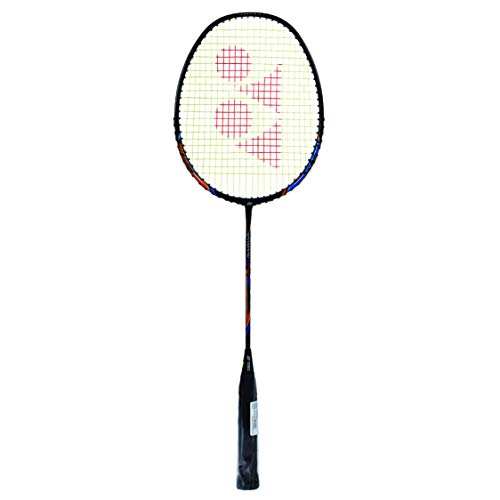
Yonex Nanoflare 700 Badminton Racket
Yonex Duora 10 Badminton Racket
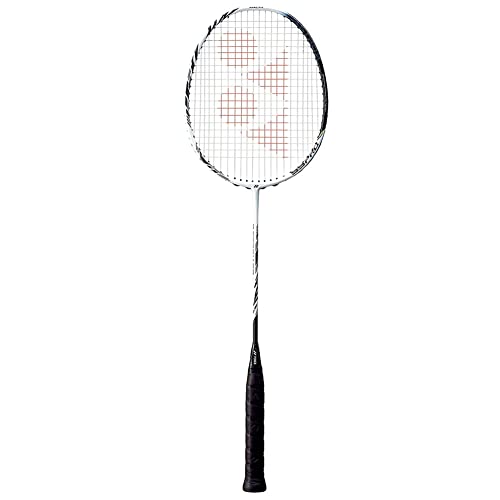
Yonex Astrox 77 Pro Badminton Racket

Best Beginner To Intermediate Yonex Badminton Racket

Yonex Arcsaber 11 Pro Badminton Racket Review

Yonex Arcsaber 11 Pro Badminton Racket

CHECK PRICE

Arcsaber 11 Pro Specifications

Strung or Unstrung: Unstrung

Weight: 3U(85-89g) / 4U(80-84g)

Grip: G4 / G5

Balance: Even Balance

Flex: Stiff

Recommended String for Power & Comfort: Yonex Aerobite Hybrid – 0.67/0.61mm

Recommended String for Control & Durability: Yonex BG65Ti – 0.70mm

String Tension Recommended: 3U 20-28 lbs/4U 19-27 lbs

Arcsaber 11 Pro Review

There is no doubt that the Yonex Arcsaber 11 Pro is one of the best stiff flex, even balanced rackets on the market. The racket performs as well as you would expect it to with these specifications. And it looks great too!

I was eager to test the new Yonex Arcsaber 11 Pro to find out whether it actually performed like an Arcsaber racket, as well as whether it was an upgrade from the original Arcsaber 11 which was released way back in 2013. Read our full review of the Yonex Arcsaber 11 Badminton racket to get more in depth information on this racket.

I found the Yonex Arcsaber 11 Pro badminton racket to be significantly better than the original one. A stronger, faster and punchier feel, as well as a better feel on the strings is present. This gives a tighter feel to the shots.
 
I was impressed with the racket’s aerodynamic qualities, which produced speed when swinging with the head swinging through with ease.

My enjoyment of using the Arcsaber 11 Pro increased as I spent more time with it. 

As far as the way it feels on the Badminton court, this Arcsaber 11 Pro racket is spot on, because of it’s solid hitting, even balance, and fast frame.

It’s clear that Yonex has put a lot of thought into designing this racket. It’s definitely a big upgrade on the popular original Arcsaber 11 racket which would not have been an easy task. 

This is an Arcsaber, and it’s an Arcsaber that many players will be attracted to due to its efficiency, power, speed, and strength.

My personal opinion is that the Yonex Arcsaber 11 Pro is much better than the original Arcsaber 11 and I’d highly recommend it to beginner to intermediate Badminton players.

CHECK PRICE


Best Intermediate To Advanced Yonex Badminton Racket

Yonex Voltric Z Force 2 Badminton Racket Review

Yonex Voltric Z Force 2 Badminton Racket

CHECK PRICE

Voltric Z Force 2 Specifications

Strung or Unstrung: Unstrung

Weight: 4U (80-84g)

Grip: G4

Balance: Head Heavy Balance

Flex: Extra Stiff

Recommended String for Power & Comfort: Yonex Aerobite Hybrid – 0.67/0.61mm

Recommended String for Control & Durability: Yonex BG65Ti – 0.70mm

String Tension Recommended: 20-27 lbs

Voltric Z Force II Review

Yonex launched its Voltric Z Force 2 badminton racket in 2014. At the time Lee Chong Wei, a former World Number 1, used this updated version of the Voltric Z Force to replace his original racket and many top players followed suit.

In addition to its head heavy design, the Yonex Voltric Z Force 2 has a number of other unique features. It has a smaller head than most other Badminton rackets, a very thin shaft, is very aerodynamic and has tungsten grommet strips.

Other than these unique features, the original Voltric Z Force feels like it has more weight at the top of the head compared to Voltric Z Force II.

The version I tested was a G4 standard grip size 4U (weight 80-84g). Whilst the racket may have tungsten grommet strips, it can mean that you need to incur additional costs in stringing. Instead of replacing one grommet, an entire strip will need to be replaced, which is more expensive. This is just something to bear in mind.

In comparison to the original Z Force, the Yonex Voltric Z Force 2 has a completely different feel. This racket has a higher sweet spot, which I found very helpful when I was getting used to it. In addition, I found no issues with framing at all.

The combination of a noticeably thinner shaft and an aerodynamic head really works well together. As a result, this racket definitely has a unique feel.

It’s immediately apparent that this is a powerful frame. As a result of these specifications, it easily falls into my favorite group of rackets and from this perspective, it does not disappoint.

I enjoyed delivering strong, controlled, accurate clears even when they were hit off center. While I was able to feel each component of the racket, I was constantly surprised by the thin shaft.

I really like the new shape, size, and weight distribution of the head. For me, however, the shuttle didn’t feel as solid on the strings as the original Voltric Z Force. In terms of aerodynamics, the Voltric Z Force 2 is superior to the original. As a result, even while the stringbed lacks the solid feel of the racket head, it still delivers a great result due to its speed of the racket head. The overhead shots were generally smoother and quicker, and definitely required less effort.

There was an incredible amount of power and accuracy in the smashes. This racket can certainly transform your smash. It’s important to emphasize that if your technique is poor or you need more flexibility in a racket, this racket won’t magically transform your smash. Nonetheless, it may allow a good player to get a bit more speed from it.

In terms of fast and flat exchanges, defense and the net area, the original Z Force struggled. All of this has changed because of the improved aerodynamics. Performing fast exchanges is easier without experiencing early muscle fatigue.

There are also noticeable changes in defence. As a result of the increased maneuverability of the Yonex Voltric Z Force 2, players can get their racket into place much faster to return the shuttle. You will therefore be able to select from a wider variety of shots, although you will still need to strengthen your forearms and wrists to get the most out of this racket.

Despite the fact that a head heavy racket requires good preparation, there have been no issues reported around the net. A higher sweet spot on the Yonex Voltric Z Force II provides a greater degree of control and responsiveness.

The Yonex Voltric Z Force 2 gave me an enjoyable playing experience, and I would recommend it to anyone.

This is a great Yonex racket in my opinion. Although it performs extremely well in all areas, it would have been even better if Yonex had somehow recreated the solidity in the hit of the original Z Force.

The racket is extremely popular and I would highly recommend it to aggressive intermediate to advanced level players.

CHECK PRICE


Best Budget Beginner Yonex Badminton Racket

Yonex Nanoray Light 18i Badminton Racket Review

Yonex Nanoray Light 18i Badminton Racket

CHECK PRICE

Nanoray Light 18i Specifications

Strung or Unstrung: Strung

Weight: 5U (75-80g)

Grip: G5

Balance: Head Light Balance

Flex: Flexible

Recommended String for Power & Comfort: Yonex Aerobite Hybrid – 0.67/0.61mm

Recommended String for Control & Durability: Yonex BG65Ti – 0.70mm

String Tension Recommended: 20-30 lbs

Nanoray Light 18i Review

The Yonex Nanoray Light 18i is a decent racquet at a low price point of around $50. As I’m sure you would have guessed from it’s name, this racket is really light. It is a 5u racket and is about 75-80g with a maximum tension of 30 lbs.

The Nanoray Light 18i is designed for beginners or social badminton players. This racket would also suit intermediate players who are battling the fatigue and sore shoulders thanks to their head heavy rackets and want to give a head light racket a try. I often test head heavy, stiff badminton rackets. However, I felt that there would be many players who would benefit from a review of an inexpensive, flexible and light badminton racket.

When I tried the Nanoray Light 18i racket for the first time with the original strings, I didn’t like it. The racket is much lighter than my usual head-heavy rackets and does not have the same power.

The next day, I switched to Yonex BG 66 ultimax strings with a tension of 27 lbs, and I was amazed. The racquet felt completely different. My swings were much faster, defending smashes became very easy, and best of all, I was able to control the shuttle, net and drop shots perfectly. There was a bit more power in my smashes, but don’t expect a head light racket to deliver the type of power a head heavy racket will. It’s just not possible.
Remember that, with a head light racket, you are exchanging power for speed and control. This often results in a better overall game for beginners to intermediate badminton players.

I would advise anyone buying this racket to have it restrung. At the low price of the racket it makes sense because you will get more enjoyment and easy playability with tighter strings on this racket.

Yonex Nanoray Light 18i’s lightweight design allows for effortless movement, increasing your agility on the Badminton court. The full graphite structure makes it look attractive which will make it more appealing to badminton players of all ages. The grip on this racket is coarse enough to prevent slipping from sweaty palms, and the handle is long enough to give you more control of the racquet and give you more balance when you hit smashes or across backlines.

Furthermore, it also has the Yonex Nanoray isometric design. You would normally expect to find this feature only in racquets that are more expensive. It is important to have good string tension with this design, as it allows you to cut through the air and reduce drag, which will result in more strength and power for your smashes and shots. As a result of its graphite structure, the body is also extremely durable.

This is an easy-to-use racquet that is suitable for players who wish to have more control and speed in their game. It is a great choice if you are a beginner or social Badminton player. I would also highly recommend it to intermediate level players who have never used a 5u racquet before and would like to experiment with one. In addition to being of decent quality, it is also not very expensive.

CHECK PRICE


Worst Yonex Badminton Racket On The List

Yonex Voltric 8 E-Tune Badminton Racket Review

Yonex Voltric 8 E-Tune Badminton Racket

CHECK PRICE

Voltric 8 E-Tune Specifications

Strung or Unstrung: Unstrung

Weight: 4U (80-84g)

Grip: G4

Balance: Head Heavy Balance

Flex: Medium

Recommended String for Power & Comfort: Yonex Aerobite Hybrid – 0.67/0.61mm

Recommended String for Control & Durability: Yonex BG65Ti – 0.70mm

String Tension Recommended: 19-26 lbs

Voltric 8 E-Tune Review

In 2014, the E-tune concept badminton racket was introduced, which allows you to adjust the head weight on the racket with push-on weighted grommets. Despite being clever, this method of testing the weight means that the racket must be restrung, making it an expensive way of finding the right racket head weight. An example of a racket in the E-Tune range is the Yonex Voltric 8 E-tune, a high-end racket that is designed specifically for intermediate players.

In my test, the Yonex Voltric 8 E-Tune badminton racket I used was rated at 4U in weight and was sized G4 in grip size. 

It is a medium flex racket that is suitable for intermediate players. When you are a beginner, a flexible shaft will allow you to generate more power with less effort. In contrast, advanced players usually choose rackets with stiff shafts, so knowing your skill level is crucial when choosing a racket.

When I tested the Yonex Voltric 8 E-tune Badminton racket, I was intrigued by the thought that it could be customized to your preferences. You can adjust the weight distribution, thereby affecting its overall performance.

Now let me run through my thoughts on this racket after testing it extensively on the court. You won’t be disappointed with the Voltric 8 E-Tune if you are looking for a racket that delivers powerful smashes. I found that there is a lot of weight concentrated on top of the racket head, so it delivers plenty of power. The power of the smashes is similar to what I experienced in the Yonex Duora 10.

The Voltric 8 E-Tune also has a large sweet spot. As a result, I noticed that it’s not necessary for the shuttlecock to hit the center of the racket in order to play a shot. The power I got was still sufficient even when I hit off-center. It is more likely that you will be able to make accurate shots when your racket’s sweet spot is larger.

Due to its lightweight body, I found that the Voltric 8 E-Tune is also easy to control. Fast swings were also simple with it. Thanks to its maneuverability, I was able to respond to my opponents’ attacks easily.

A racket like this is best suited to intermediate players who are heavy hitters. I highly recommend this to players who like to play aggressively because the heavier weight gives your shots the power they need.

It’s also for people who aren’t concerned about the cost of a racket. Although it’s not outrageously expensive, it’s still quite expensive for some people. 

To be totally honest, the Yonex Voltric 8 E-tune is my least favorite racket of the 10 rackets I tested for the list.

There are a couple of reasons why it was at the bottom of my list.

Firstly, the price of this racket is quite high for a racket that was launched years ago. For this reason I can’t justify the cost. In saying that, this is a unique racket that some players might want to pay a premium for.

The second reason why it’s my least favorite racket on the list is that at the time of launch, adding grommets for additional weight was a clever idea. This was because it would allow you to adjust the head weight by a few grams and so personalize your racket. Thus, the Yonex Voltric 8 E-tune gave a competitive advantage many years ago. The grommet-based system for adjusting racket head weight is outdated now.

Today’s racquet technology is significantly more advanced than that used in Yonex Voltric 8 E-Tune. I would still recommend it to an old school player who wants to tinker with his racket to make it exactly how he wants it. However, there are better options on my list.

CHECK PRICE


Remaining Top 10 Yonex Badminton Rackets

Yonex Astrox 99 Pro Badminton Racket Review


Yonex Astrox 99 Pro Badminton Racket

CHECK PRICE

Astrox 99 Pro Specifications

Strung or Unstrung: Unstrung

Weight:3U (85-89g)

Grip: G5

Balance: Head Heavy Balance

Flex: Stiff

Recommended String for Power & Comfort: Yonex Aerobite Hybrid – 0.67/0.61mm

Recommended String for Control & Durability: Yonex BG65Ti – 0.70mm

String Tension Recommended: 21-29 lbs

Astrox 99 Pro Review

A two-time world champion and former world number one badminton player, Kento Momota, collaborated with Yonex to design the Yonex Astrox 99 Pro badminton racket to provide the most offensive playing experience possible. 

In the Yonex Astrox series, the Astrox 99 Pro will still produce the heaviest swing weight. This new version, however, incorporates new frame technologies for improved control, better recovery, and easier hitting to give an improved user experience. 

Despite correcting some of the previous Astrox 99 generations flaws, the Pro version of the Astrox 99 still retains a great deal of its top-end qualities.
 
When I tested the Astrox 99 Pro, the first thing I noticed was how heavy the head of the racket is. This racket definitely falls into the head-heavy category of badminton rackets.
 
In addition to this, you can feel the Astrox 99 Pro’s high overall stiffness, resulting in two very different outcomes when playing with it. Smashes and attacking clear are great if you’re actively chasing the shuttle, or if you’re going for a rear court. It is very easy and effortless to generate power due to the stiffness and weight of the head.
It will not help you with a passive situation like reaching towards the shuttle during fast flat defensive situations or simply being slightly late getting to the shuttle.
 
Its sweet spot and speed have been increased, which is one of the biggest changes to the Astrox 99 Pro. Compared to its predecessor, the Astrox 99 Pro is significantly faster due to its fully recessed frame, and it has a massive sweet spot as well. For this generation, the gap between each string has been increased, and I’m pretty sure that the larger grommets have contributed to the increase in sweet spot, allowing the string to move more freely and hold the shuttle better.
 
As I was taking a shot, I also noticed how stable the racket face is on the Astrox 99 Pro. It is one of the more stable rackets I’ve seen in quite a while due to the amount of head weight and stiffness of the racket. The Yonex Astrox 99 Pro provides plenty of racket face stability for players who prefer head-heavy rackets and who like to make their shots with a lot of stability.
 
The Yonex Astrox 99 Pro is a levelled-up Astrox 99 that’s faster, smoother, has a bigger sweet spot, and is more powerful than the original Astrox 99.

CHECK PRICE


Yonex Astrox 100 ZZ Badminton Racket Review

Yonex Astrox 100 ZZ Badminton Racket

CHECK PRICE

Astrox 100 ZZ Specifications

Strung or Unstrung: Unstrung

Weight: 4U (80-84g)

Grip: G5

Balance: Head Heavy Balance

Flex: Extra Stiff

Recommended String for Power & Comfort: Yonex Aerobite Hybrid – 0.67/0.61mm

Recommended String for Control & Durability: Yonex BG65Ti – 0.70mm

String Tension Recommended: 20-28 lbs

Astrox 100 ZZ Review

The Yonex Astrox 100 ZZ is an attractive navy coloured racket with blue and white decals on one side of the frame which are also on the super-thin shaft. It also has an orange flash towards the neck on the opposite side of the frame. 

The Astrox 100 ZZ is rated as an extra stiff head-heavy racket on the Yonex chart.
 
It was evident the moment I hit the first shuttle that the Astrox 100 ZZ was special. Compared to other Yonex rackets, this racket has a completely different feel.
With the G5 grip size feeling so comfortable, it was a pleasure to hit. I could tell after the first test session that this racket was special.
 

There is a completely different kickback from the shaft. The shaft seems to bend towards the head. The timing is the same, but I feel a great, solid feel throughout the shot and a very fast recovery.

I really enjoyed the movement of this racket and the great clears it delivered. With the new shape, the head appears narrower and feels more compact, but the racket is still a standard size. Regardless of how Yonex changed the frame shape, it’s excellent.

The shaft is very thin and short compared to others. As opposed to hollow shafts that have been used for decades, Yonex introduces a solid core shaft for the first time. The connection between handle and head feels perfect and results in great, crisp shots every time.

During mid-court hitting, this racket performed exceptionally. It was really easy to hit flat drives, which had a great feel and didn’t tire my arm at all.
 
Fast exchanges from and to the net proved that the Astrox 100 ZZ is quick to manouver. As I hit flat drives and blocked at the net, I had plenty of control thanks to the solid feel of the stringbed. I was impressed with the power and sharpness of the lifts into the rear court.
 
When it comes to manoeuvrability around the net, the Astrox 100 ZZ does not disappoint. This touch is lighter than air yet deadly. A touch of finger power and a slight change in grip sends the shuttle darting towards the ground.
 
In my opinion, the Astrox 100 ZZ will be a top seller for Yonex, as it delivers to a great degree in every area of the Badminton court.

CHECK PRICE


Yonex Astrox 88D Pro Badminton Racket Review


Yonex Astrox 88D Pro Badminton Racket

CHECK PRICE

Astrox 88D Pro Specifications

Strung or Unstrung: Unstrung

Weight: 4U (80-84g)

Grip: G5

Balance: Head Heavy Balance

Flex: Stiff

Recommended String for Power & Comfort: Yonex Aerobite Hybrid – 0.67/0.61mm

Recommended String for Control & Durability: Yonex BG65Ti – 0.70mm

String Tension Recommended: 20-28 lbs

Astrox 88D Pro Review

Power players, usually those in the backcourt, who want a more explosive attack will benefit from the Yonex Astrox 88D Pro. Due to its weight distribution along the top half of its racket head, the Astrox 88D Pro creates powerful, sharp angle smashes. The Astrox racket range is designed to allow players to dominate high-speed games with their powerful, steep smashes. The Astrox 88D Pro is no different.
 
A 4U (80-84g) Yonex Astrox 88D Pro racket with a G5 grip size was the racket I tested.
 
Despite the lack of additional weight at the top of the head, the Astrox 88D Pro is so much more maneuverable than its predecessor, the Astrox 88D. I guess this racket has a better weight distribution around the head since it feels less top-heavy than the original, allowing for a more balanced but still heavy swing.
 
In comparison to its predecessor, the new Astrox 88D Pro swings faster. As a result of its more aerodynamic design, this racket provides a much faster response. Although it’s full-sized, this racket still feels compact, with its snappy, refreshing feel.
 
The racket delivers power when hitting from the rear court. Although the punch is still powerful, it is delivered much faster than the original Astrox 88D version, but does not have the same overall weighty punch. 
 
The extra maneuverability of the frame allowed me to feel the Astrox 88D Pro perform well in attack. There was less effort required to perform punch clears, drops, slices and smashes, and the shots seemed crisper. Nonetheless, the power of this version is slightly lower than the original 88D due to its head weight, although some players may find it easier to use for bigger smashes. In the end, it really depends on your preferences and how good you are at swinging a racket.
 
There was also an improvement in midcourt hitting compared to the original Astrox 88D. I really enjoyed the flat drives, as they were easy and had a great feel.
 
When it comes to net area performance, I think the head moves well for interceptions while allowing plenty of control for short fast shots and deft touches.
 
In terms of defense, I found the Astrox 88D Pro to be so much more reliable than the original. For players who are looking for a little weight behind their defensive shots, and yet still need a fast, positive response to any situation, this will make a great choice. Players are able to defend with more confidence due to the sharpness of feel.
 
In my opinion, the Yonex Astrox 88D Pro will appeal to many players who like a solid performer but also prefer a faster frame. This racket definitely gets my stamp of approval.
 

CHECK PRICE


Yonex Nanoflare 700 Badminton Racket Review

Yonex Nanoflare 700 Badminton Racket

CHECK PRICE

Nanoflare 700 Specifications

Strung or Unstrung: Unstrung

Weight: 4U (80-84g)

Grip: G5

Balance: Head Light Balance

Flex: Medium Stiff

Recommended String for Power & Comfort: Yonex Aerobite Hybrid – 0.67/0.61mm

Recommended String for Control & Durability: Yonex BG65Ti – 0.70mm

String Tension Recommended: 20-28 lbs

Nanoflare 700 Review

With the Yonex Nanoflare 700 badminton racket, players are able to play more nimbly and gain greater shuttle acceleration. It is a head light racket with unique technology and construction to help players improve their game.

The Nanoflare 700 I tested had a 4U weight and G5 grip.

The Yonex Nanoflare 700 feels very responsive and user-friendly, and I found that it gave me a lot of control over the shuttle. As you play with the racket, you have a good amount of hold on the shuttle. It is the shuttle hold that is characteristic of the Yonex Arcsaber series, but the Nanoflare 700 is remarkable in this respect too. Squeezing the racket handle, you’ll feel as if you can hold the shuttle and change direction before it flies off your strings. In addition, I believe that the medium flex of this racket contributed to its performance.

Due to its light weight and ease of maneuverability, this badminton racquet is incredibly easy to use. You can’t get tired playing with this racket, which is great for defensive play.
The light head of this racket makes it very quick at defensive play, driving, and front court during doubles. On most parts of the racquet face, you will still be able to strike the shuttle with a good quality shot thanks to its large sweet spot.

In addition to being lightweight, this racquet is very quick when needed. I would recommend the Nanoflare 700 for beginners to intermediate players because of its light weight and forgiving nature. Power generation can be challenging with this racquet, which is why it is not recommended for advanced players.

As far as the front court was concerned, it was very easy to swing and very fast. It’s basically what you’d expect. During back court play, I found my racket not performing as well as I would have liked, and hitting baseline-to-baseline took more effort than I wanted to put in.

Overall, the Nanoflare 700 is an excellent head light racket. It is ideal for players who want a racket that is easy to use and is fast. The paint job and color schemes on them are amazing too! I would definitely recommend it to beginner to intermediate players.

CHECK PRICE


Yonex Duora 10 Badminton Racket Review

Yonex Duora 10 Badminton Racket

CHECK PRICE

Duora 10 Specifications

Strung or Unstrung: Strung with Nanogy 95-24

Weight: 3U(85-89g)

Grip: G4

Balance: Even Balance

Flex: Stiff

Recommended String for Power & Comfort: Yonex Aerobite Hybrid – 0.67/0.61mm

Recommended String for Control & Durability: Yonex BG65Ti – 0.70mm

String Tension Recommended: 19-26 lbs

Duora 10 Review

The Yonex Duora 10 badminton racket was launched in 2015. Although it’s been a few years since its launch, it’s still a firm favorite among many players. This is exactly why I decided to review this racket in 2022.
 
One side of the head of the Duora 10 has a box type construction while the other has a much sharper cutting edge type construction. Most players use this faster side for backhand shots, but that’s down to personal preference. The idea is to provide a faster, more powerful swing on the forehand and backhand.
 
I felt it was important that a racket with two different sides needed to be tested. I’ve got to see if the faster side works on both the forehand and backhand.
 
There is a noticeable difference in feel between the two sides of the frame. It’s important to note that these aren’t massive differences in speed, so don’t expect lightning fast speeds here. The same results can be achieved with a good aerodynamic frame.
 
According to me, the Yonex Duora 10 has a larger head than an average isometric square head, but is smaller than the Yonex ArcSaber 11. This racket features a short shaft and a longer handle, making it more forgiving and easier to control.
 
My overall impression of the Duora 10 racket was positive once I got used to the feel. To keep the shuttle in, I had to ease off the hitting at times during my clears.
 
The racket is stiff, but not very stiff. I found the Duora 10 to have a softer stiff feel than many high-end Yonex rackets. There is probably a reason for this, since this racket is designed for players who prefer a more balanced style of play.
 
It was hard for me to decide which side of the face I liked most when playing drop shots. In my hand, there is the usual solid feel that I’d expect from a Yonex racket and then when I spin it, it feels different with the head cutting through the air faster. It’s important to know how the grip feels to know which side is which. A few new possibilities will be available to some players, but only if they control the racket’s grip and head.

The 3U racket felt very good to me. It seems that there has been a move towards lighter frames for head heavy rackets, which I can understand. There must be care taken not to reduce the weight of the frame too much and make it feel thin. Drop shots with the Yonex Duora 10 are solid and accurate.

Combined with the slightly weighted head and 3U overall weight, the speed of the frame delivers great power when smashing.
When smashing, the fast side is my preferred forehand and slow side is my preferred backhand, but it would depend on each player’s preference.
 
I preferred the fast side on my backhand for flat drives and pushes because they felt so easy. It can become confusing since it can be difficult to switch sides based on your shot choice. I was impressed with the performance of the racket, although it played slower than some rackets I have tested. In spite of this, I would recommend this 3U version for those who want that added punch when it comes to tap shots.
 
Despite not being the fastest racket I have used, the Duroa 10 defends well. So no complaints with the defensive play of this racket.

In the net area, things were more straightforward. Short, sharp taps to the floor were possible on the fast side on the backhand. To get quality results, you need good technique on the net shots though.

When hitting down, or pushing into mid court, the slightly lighter head enables a much faster response.
 
I found that in terms of defensive and net performance, the Yonex Duora 10 improved my backhand performance. As well as being more stable and powerful, the dual optimal system makes it easier to smash. This racket is ideal for aggressive players seeking a good balance between defense and net play.
 
Overall, the Yonex Duora 10 is a very good racket. It’s certainly worth a test to see if it helps your game. I would recommend intermediate to advanced level players try this racket to try to give them that slight improvement they’ve been looking for.

CHECK PRICE


Yonex Astrox 77 Pro Badminton Racket Review


Yonex Astrox 77 Pro Badminton Racket

CHECK PRICE

Astrox 77 Pro Specifications

Strung or Unstrung: Unstrung

Weight: 3U(85-89g)

Grip: G4

Balance: Head Heavy

Flex: Medium

Recommended String for Power & Comfort: Yonex Aerobite Hybrid – 0.67/0.61mm

Recommended String for Control & Durability: Yonex BG65Ti – 0.70mm

String Tension Recommended: 21-29 lbs

Astrox 77 Pro Review

In response to the success of their Astrox 77 badminton racket, Yonex has introduced the Astrox 77 Pro badminton racket. According to Yonex, the new ASTROX 77 Pro features advanced technologies for better performance and higher smash power than its predecessor.

With a mid-flex shaft and a head-heavy balance point, the ASTROX 77 PRO offers extra power for intermediate and advanced players alike.

The Yonex Astrox 77 Pro that I tested was a 3U weight and G4 Grip.

Before I tested the Astrox 77 Pro I was looking forward to finding out how good this racket is with smashes. Although I’ve read claims that it’s slightly head heavy, I felt that it was quite a heavy racket when I was using it. The shaft is stiff, and the racket weighs 85-89 grams, which makes sense since it’s a 3U racket. Still, it did take a lot of effort for me to use it. The racket is very powerful, allowing me to hit heavy smashes rather than fast and sharp ones.

Due to it’s lack of flexibility, I couldn’t get a good soft touch with the Astrox 77 Pro. In spite of Yonex’s claim that it is a medium flex racket, I found it to be more stiff than I expected. This is a good choice for long, drive shots, and defensive clearing.

As part of my thorough test of the Astrox 77 Pro, I did some drills. It involved smashing, defensive and fast drives,driving, netting, push lobs, lifting, as well as full court transitions. It’s great to have the extra power and strength of the Astrox 77 Pro.

I was able to smash pretty well with the Yonex AStrox 77 Pro. It wasn’t exceptional, but it was definitely above average. The drives were better on long drives to the back court.

During my time playing with the racket, I found that the Astrox 77 Pro was lacking in soft touches and blocks. With a head heavy racket, getting a soft block to the front of the court is difficult. The Astrox 77 Pro is no different in this regard.

Astrox 77 Pro felt stiff when I played net shots, so I felt it lacked the soft touch there as well.

In general, I found this racket to be very good. Based on my comparison of the original Astrox 77 with the new Astrox 77 Pro, the Pro version offers more solid shots while the original Astrox 77 offers better soft touches. As a player, you need to decide which qualities you value more in a racket that you play with when deciding if it’s the right badminton racket for you.

CHECK PRICE

Are Yonex Badminton Rackets Good?

Yonex badminton rackets are widely regarded as some of the best in the market. They are known for their high-quality construction, advanced technology, and exceptional performance. Yonex rackets are popular among both amateur and professional players alike, and are often used by top-ranked players in major badminton tournaments. Their rackets come in a variety of styles and models to suit every player’s needs and playing style. So, if you are looking for a reliable and high-performing badminton racket, Yonex is definitely a brand worth considering.

Is Yonex A Good Brand For Badminton?

Yonex is undoubtedly one of the top brands for badminton equipment. With their focus on research and development, they have consistently produced high-quality rackets, shoes, and shuttlecocks that are trusted by professional players around the world. Their products are known for their durability, precision, and power, giving players a competitive edge on the court. Yonex has also been a pioneer in introducing new technologies such as the isometric head shape and the carbon graphite frame, which have revolutionized badminton equipment design. Overall, Yonex is an excellent brand for badminton players of all levels who value performance and quality.

Conclusion

I hope that my article has helped you by showing you the factors you need to consider so that you know exactly how to choose a Yonex Badminton racket which will take your game to the next level on the Badminton court. The 10 rackets I tested are the most popular Yonex Badminton racquets that are currently on the market. The 10 Yonex Badminton rackets that I tested cover all skill levels too, so it will be helpful anyone wanting to play Badminton. From beginners or those brand new to the game of Badminton, to intermediate Badminton players, to advanced tournament level badminton players. If you want to know How To Choose A Badminton Racket, read our article that explains all the factors to consider when choosing a racket.

If you have found this information helpful or want to comment on the article please let us know.

Selkirk NEO Composite Pickleball Paddle Review

selkrik neo composite pickleball paddle

Why review the Selkirk NEO Composite Pickleball Paddle? Well, we’ve all been there. You’ve just watched an insane game of pickleball and instantly want in. Or you’ve been playing for a while but are looking for a change of scenery after a rough patch of form.

Over the past few years, I’ve had quite a few people come up to me and ask about what paddle they should choose.

Even though I’d give my opinions on paddles I’ve used, I quietly started compiling a list of the pros and cons of each of the paddles I’ve used. And if you asked me now, I would have a clear, concise answer for you. I’d tell you to go for the Selkirk Neo Composite Pickleball Paddle.

While every paddle has its pros and cons, I truly believe that the Selkirk Neo is the best paddle for those who want to take their game to the next level. 

I’ll be going very in-depth about the features, pros and cons of this paddle. Hopefully, this will make the decision easier for you. 

So let’s get into it:

Overview

SELKIRK NEO COMPOSITE PICKLEBALL PADDLE

Overall Rating: 4.7 out of 5

Player Sponsorships: Over 200 professional players

Surface: Composite Vinyl

Design: Red And White Vinyl Graphics

Core: X4 Powercore Polymer Core 

Length: 15.67 inches (398 mm)

Weight: 7.7 – 7.9 ounces (218 g – 223 g)

Width: 7.875 inches (200 mm)

Grip Circumference: 4.125 inches (104. 775 mm)

Grip Length: 5 Inches (127 mm)

Grip Material: Selkirk Thingrips

Edge: EdgeSentry

Meets USAPA requirements: Yes

Key Features of the Selkirk Neo Composite Pickleball Paddle

Design and Build


CHECK PRICE

If you ask me what I look for in a good pickleball paddle, the first thing I’ll tell you about is the sweet spot of the paddle. In essence, the sweet spot is the area in which the power developed by your paddle swing is optimized. For example, some paddles have honeycomb cores that distribute the impact weight along the entire surface. While this makes it easier to hit shots, it takes a lot away from shot finesse, ability to control your shot, and power.

The SELKIRK NEO COMPOSITE PICKLEBALL PADDLE comes in at that perfect place where you have an apt balance in your paddle along with a certain amount of necessary power. This not only allows you to learn your game with less restrictions, but it also allows you to hold on to the same paddle as your skill as a player improves.

The name makes it obvious, but the core of the Selkirk Neo is made from a Composite Polymer. This layered core makes sure that your paddle surface provides you with great balance, even at inclined angles. In addition, the composite polymer material that is used in core construction distributes paddle impacts evenly throughout every layer.

The paddle body itself is designed in the classic paddle shape. This wider-bodied design works much better for players who want to mold their game around versatility instead of a specific type of shot. In addition, this acts as a learning curve for newer players to figure out a specific playing style.

Grip

This might come as a bit of a surprise, but the grip that your paddle comes equipped with is almost as important as the paddle’s body, material, and looks. A good grip provides two things- comfort and versatility. 

The SLK ThinGrip is the perfect grip size with its 4.125-inch circumference. The room between your palm and the handle is at that place where you don’t hit a loose shot due to bad grip fitting. The material itself ensures that your palm fits perfectly, irrespective of whether your palms are sweaty or not.

Pros and Cons

Anyone who has ever played a fair amount of pickleball can attest to one thing: Absolutely no single paddle in the world is perfect. This is true in this case specifically because there are many more expensive options out there in the market. Every paddle has its pros and cons irrespective of its price range, and you need to be aware of those before settling on your paddle. So, let’s look into the pros and cons of the Selkirk Neo:

Pros

  • The first thing that I noticed while using the Selkirk Neo was its genuinely perfect sweet spot. Even in my first game with it, I never felt off-balance for one second. And that is a surprising aspect of a paddle that provides you with so much power. The ball seemed to slide nicely off the surface irrespective of how badly I timed my shots. Great first impression!
  • The premium Selkirk ThinGrip paddle grips provide a weirdly satisfying level of comfort to your game. A few games into using it, I felt like the paddle had become a part of my natural movement with absolutely no extra effort going into readjusting my grip after every shot.
  • The paddle weighs in at an extremely light, yet comfortable 7.8 Ounces. The light weight adds a lot of versatility to your game providing some much-needed finesse for newer players.
  • Beautiful surface design is an absolute plus if you want to show off your game. The Bold Neon Blue Vinyl Graphics are a wonderful addition.

Cons

  • Alright, maybe there are better-looking paddles out there with the elongated heads. However, the shape might be a benefit depending on where you are at on your pickleball journey.

Final Verdict

The Selkirk Neo Composite Pickleball paddle is an absolute no-brainer at its price range for those who are at the very beginning of your pickleball journey. If you’re further along, you might have different preferences based on your playing style. However, this is still a great paddle and highly recommended. Please take a look at our article containing the most comprehensive list of Pickleball equipment in the market today.

CHECK PRICE

Is Badminton A Good Workout? Discover The Incredible Health Benefits Of This Awesome Sport!

is badminton a good workout

If you’re looking for a fun and energetic workout that gets your heart pumping and strengthens your muscles, then look no further than badminton!

This social and dynamic sport has been enjoyed by people of all ages and fitness levels for decades. Not only is badminton a great way to stay active, but it also offers a multitude of health benefits that might surprise you. So, is badminton a good workout? Let’s find out!

Cardiovascular Health

First and foremost, badminton is a fantastic cardiovascular workout. Engaging in regular cardiovascular activities is crucial for maintaining a healthy heart. The fast-paced nature of the game requires constant movement, agility and quick reflexes. Whether you’re competing in singles or doubles, you’ll find yourself darting across the court, lunging, jumping, and reaching for the shuttlecock. This helps elevate your heart rate, improves your blood circulation, enhances lung capacity, and helps improve your endurance.

Full-Body Workout

Badminton is not just about those lightning-fast racket skills and powerful smashes. It’s a sport that engages your entire body, making it a fantastic full-body workout. The quick and repetitive movements involved in swinging the racket in badminton strokes help strengthen your upper body, especially your shoulders, back, arms, and chest muscles. Additionally, the continuous movement of your feet, jumping, changing direction and the lunging movements work wonders for your lower body, improving your leg and core strength.

Agility And Flexibility

badminton good workoutBadminton demands quick reflexes and rapid changes in direction, improving your agility and coordination. The fast-paced nature of the game requires rapid changes in direction, quick footwork, and lightning-fast reactions. Constantly reaching and lunging for the shuttlecock will enhance your flexibility, as it requires frequent lunging, stretching and bending. Flexibility not only helps prevent injuries during the game but also in your day-to-day activities, making badminton a great way to enhance overall mobility.

Weight Loss

If you want to exercise to lose a few extra pounds, then badminton can be an excellent weight-loss activity. Playing badminton for an hour can burn hundreds of calories, depending on your intensity level. The continuous movement and the variation in strokes help engage multiple muscle groups throughout your body, raise your heart rate, and so help you lose weight.

Mental Well-Being

Another notable benefit of badminton is its positive impact on mental well-being. Exercise not only benefits the body but also has a positive impact on our mental health.  Engaging in physical activity releases endorphins, the feel-good hormones, which reduce stress and anxiety. So, when you step onto that badminton court, you’re not just exercising your body but also boosting your mental well-being. Engaging in regular physical activity, such as playing badminton, has been proven to boost mood, reduce stress levels, and promote better sleep.

Boosts Mental Focus

Badminton is not just physically demanding; it also requires a high level of mental focus. You need to strategize, anticipate your opponent’s moves, and make split-second decisions. It’s like a game of chess but with more running and sweat! Regularly engaging in badminton can enhance your concentration, sharpen your mind, and improve your cognitive abilities.

Social And Fun

badminton workoutOne of the best things about badminton is that it’s a social sport. You can play it with friends, family, or even join local clubs to meet fellow badminton players. Exercising in a social setting not only makes the experience more enjoyable but also provides accountability and motivation. Plus, the friendly banter and laughter exchanged during matches will keep your spirits high and make your workouts feel less like a chore.

The social aspect of the sport is also a mood enhancer, as it allows you to connect and bond with friends or family members while having fun on the court. So not only are you getting fit, but you’re also cultivating a healthy mind and building meaningful relationships.

Suitable For All Fitness Levels

One of the greatest advantages of badminton is its inclusivity. Whether you’re a beginner or an advanced level badminton player, badminton can be adapted to suit your fitness level. You can start at a leisurely pace and gradually increase the intensity as you become more comfortable with the sport. Plus, badminton offers different playing formats, such as singles and doubles, allowing you to play according to your preferences and abilities.

Not Weather Dependent

Badminton is a sport that can easily be played both indoors and outdoors. So whether you prefer the controlled environment of an indoor court or the fresh air and sunshine of an outdoor setting, you have the flexibility to choose what suits you best. This accessibility makes badminton an excellent workout option all year round, regardless of the weather.

Conclusion

So, is badminton a good workout? Absolutely!

Badminton is undeniably a good workout that offers numerous health benefits. With its combination of physical exertion, mental stimulation, and social interaction, badminton offers a well-rounded fitness experience. It combines cardiovascular exercise, strength training, and mental well-being into one enjoyable package.

So grab a badminton racket, find a partner, and start smashing those birdies across the net. Whether you’re a seasoned player or a beginner, badminton is sure to provide you with a fun and effective workout that leaves you feeling energized.

Remember, the key to a successful workout is consistency. So make badminton a regular part of your fitness routine, and watch as you reap the rewards both physically and mentally. Get ready to serve, volley, and smash your way to a healthier and happier you! Read our reviews of the Best Badminton Rackets to find the best racket for you.

How To Choose A Badminton Racket. The Easy To Follow Guide!

how to choose a badminton racket

Welcome to our easy to follow guide on how to choose the right badminton racket for you! Whether you’re an experienced player or a beginner, finding the perfect racket can greatly enhance your game. It will also elevate your performance on the court and improve overall enjoyment of the game.

With the wide variety of options available, we understand that the process can be overwhelming. In this article, we’ll walk you through everything you need to know to make an informed decision when selecting your badminton racket. So, let’s dive in!

Determine Your Playing Style

Before embarking on your quest for the ideal badminton racket, it’s important to understand your playing style. Are you an aggressive attacker who loves smashing the shuttlecock, a defensive player relying on quick reflexes and control, or perhaps a balanced all-rounder?

Identifying your playing style will help you narrow down your options and find a racket that complements your strengths on the court.

Consider Your Level of Experience

Whether you’re a beginner or an advanced badminton player, the right racket can make a world of difference. Newcomers to the sport should opt for a racket that offers more control and forgiveness with a larger sweet spot and a flexible shaft to help generate power.

Experienced players might prefer a racket that provides less power, but more control and feel. Understanding your skill level will guide you towards choosing a racket that suits your needs and abilities.

String Tensionbadminton racket string tension

The string tension of your racket can affect your shot accuracy and the feel of each stroke. Higher tension provides more control and accuracy but sacrifices power. Lower tension offers more power but can be less precise.

Beginners should usually have higher tension racket strings, while advanced badminton players should consider lower tension strings. Consider your playing style and skill level when deciding on the appropriate string tension for your racket.

Badminton Racket Balance Point

A badminton racket’s balance point is located along its shaft. This is the point at which you can balance your racket on your finger. You feel every racket differently because of its balance point.

The three balance classes are Head-Heavy, Head-Light, and Even Balance. These balance classes don’t indicate the racket’s weight. It is rather a helpful indicator of where most of the weight is actually situated within the racket. Lets briefly look at these three balance classes:

Head Heavy Badminton Racket

A head-heavy racket is often referred to as a power racket. This is because it gives you more power when hitting badminton shots, but it also slows down your recovery time. When you choose a racket that is head heavy, you are likely to sacrifice speed for power. The majority of the graphite in head heavy rackets is positioned closer to the head. This increases power for smashes and clears, but reduces swing speed for front court and midcourt play.

If you generally play from the rear court and are an aggressive badminton player, head heavy badminton racquets may be suitable for you.

Do you enjoy smashing, play singles or attack from the back of the court in doubles, then you should consider choosing a Head Heavy racket.

It may be quite physical demanding to play badminton with a Head Heavy badminton racquet if you are a beginner, so it’s no the ideal type of racket for beginners.

Head Light Badminton Racket

Doubles is a much more popular game type than singles, so Head Light badminton rackets are better suited for most club players. Players who prefer control or a speed advantage in their game may benefit from Head Light badminton racquets.

As you swing the racket, it feels lighter because more weight is distributed at the handle. As a result of the head and frame being lighter, head-light rackets are much easier to handle and swing. The ability to react quickly and return opposing smashes is crucial when defending against smashes.

Also, Head-Light rackets are much more useful for finishing rallies at the front of the court when playing shots at the net.

The Head-Light racket is a great choice for players who specialize in driving, attacking, and fast badminton, or are excellent singles players with great swing speed and technique.

Even Balance Badminton Racket

Whether you are a beginner or an advanced player, the even balance Badminton racket is very easy to use.

An Even-Balance racket aims to provide a middleground between a Head-Heavy and a Head-Light racket. It gives you enough power from the back and enough control & maneuverability up front.

With its evenly distributed weight, this badminton racquet is perfect for all round players due to its ability to generate power and maintain excellent control.

The Even-Balance racket is the best choice if you don’t know whether you’ll play at the net or at the back. This is because it can handle all kinds of shots. As most regular players carry multiple rackets for different scenarios, even-balance rackets are excellent for developing an all-around game if you are looking to start playing.

Having an even balanced racquet can help you perform at your best if your game involves a mixture of clears, drops, and smashes.

For more advanced players or those who play singles and doubles frequently, you may also consider purchasing an even-balanced racket to offer you something that can help in all scenarios.

Grip Sizebadminton racket grip size

Having the right grip size is often overlooked but is an essential aspect of choosing a badminton racket. The grip should feel comfortable and secure in your hand, allowing you to maintain a firm hold during intense rallies.

Having the right grip size ensures a comfortable and secure hold on the racket. A grip that is too small can result in a loss of control, while a grip that is too large can lead to fatigue. It’s important to find the right balance.

Additionally, consider the shape of the grip, oval or octagonal, based on your personal preference. A grip that is too large or too small can negatively impact your performance and lead to discomfort or even injury. Experiment with different grip sizes to find the one that suits you best.

Badminton Racket Stiffness Rating

There is a stiffness rating for each badminton racket that determines how easily the shaft bends. Yonex badminton rackets generally fall into four categories: Flexible, Medium, Stiff, and Extra Stiff.

For players with quicker, more advanced swing speeds and techniques, stiffer rackets are better suited to better control over the shuttlecock. The flexible shaft in flexible rackets generates more power with less effort. So they are better suited to players with slower swing speeds. Rackets with stiff shafts are typically preferred by advanced players, while those with flexible shafts are preferred by beginners.

Badminton Racket Weight

Weight classes for badminton rackets are indicated by the letter ‘U’. In general, badminton rackets weigh between 80 and 95 grams.

Skilled players usually prefer heavier rackets. In addition to accumulating more momentum, heavier rackets transfer optimal speed and power to the shuttlecock.

It is better for beginners to use lightweight rackets as they are easier on their wrists and shoulders. They are also easier to control. Club and social players can perform faster serves with lighter rackets, allowing them to switch to different strokes easily.

Today, the most common badminton rackets on the market are 3U (85-89 g) and 4U (80-84 g).

Conclusion

Choosing the best badminton racket is a personal journey, but armed with the knowledge and tips we’ve shared, you’re now equipped to make an informed decision. Remember to consider your playing style, experience level, stiffness rating, weight, balance, grip size and string tension. With the right racket in hand, you’ll be ready to excel on the badminton court and enjoy the game to the fullest. Read our reviews of the Best Yonex Badminton Rackets where we review the top 10 Yonex badminton rackets for all skill levels and playing styles.

Is Racquetball A Good Workout? Find Out The Amazing Health Benefits Of This Great Sport!

Is Racquetball A Good Workout? Find Out The Amazing Health Benefits Of This Great Sport!

If you’re looking for a fun and challenging way to stay in shape, racquetball might just be the perfect sport for you. This fast-paced sport has many fitness benefits. From burning calories to improving cardiovascular health and building muscle strength, racquetball offers a wide range of advantages that make it an excellent choice for those looking to get into shape.

One of the great things about racquetball is its versatility. Whether you’re a beginner or an advanced player, you can adjust the intensity of the game to suit your fitness level and goals. As you become more skilled, you can increase the speed and intensity of your shots or challenge yourself. This constant progression keeps you motivated and ensures that you continue to see improvements in your fitness level over time. In this article, we will explore why racquetball is considered a good workout and how it can benefit your overall fitness.

Let’s explain all the benefits of playing Racquetball:

Full-Body Workout

Racquetball engages multiple muscle groups throughout your body, making it an excellent full-body workout. The fast-paced nature of the game requires quick movements, including running, stretching, and lunging, which work your legs, arms, glutes, and core. Additionally, swinging the racquet works your arms, shoulders, and upper back, providing a well-rounded workout for your entire body. The constant movement and quick changes in direction also enhance your agility, balance, and coordination. So, instead of targeting specific muscle groups, racquetball provides a holistic full-body workout that can help you tone and strengthen your entire physique.

Cardiovascular Benefitsis racquetball a good workout

Playing racquetball is a high-intensity aerobic activity that gets your heart rate up and increases your cardiovascular endurance. The constant movement and fast-paced rallies require bursts of energy, improving your stamina and overall cardiovascular health. The fast-paced nature of the game gets your heart pumping and your blood flowing, which ultimately improves your cardiovascular health. Regularly playing racquetball can increase your endurance, help you improve your lung capacity, lower your resting heart rate, and improve your overall cardiovascular fitness, and lower the risk of heart disease

Calorie Burning

If you’re looking to shed some extra pounds, racquetball canhelp you in your weight loss journey. The constant movement and vigorous nature of the game make it a high-intensity workout that helps burn calories at a rapid rate. So, if you’re tired of traditional workouts and want something more exciting, racquetball might be the perfect activity for you.

Strength And Power

The explosive movements in racquetball, such as hitting the ball with force and changing direction quickly, help develop strength and power. The repeated swings and lunges build muscular endurance, while the fast-paced nature of the game enhances your speed and agility. These physical attributes are not only beneficial for racquetball but also transferable to other sports and everyday activities.

Balance And Coordination

Racquetball demands excellent balance and hand-eye coordination. The rapid changes in direction and the need to react quickly to the ball improves your spatial awareness. As you become better at anticipating the ball’s trajectory and positioning yourself correctly, your overall coordination and balance will also improve.

Mental Stimulation

In addition to the physical benefits, racquetball provides mental stimulation. The game requires strategic thinking, quick decision-making, and the ability to adapt to different playing styles. By engaging your mind, racquetball can enhance your cognitive skills, including concentration, focus, and problem-solving abilities. This mental stimulation can be a refreshing change from traditional workouts and provide an added challenge to keep you motivated.

The fast-paced nature of the game requires quick thinking and strategic planning. You’ll constantly be analyzing your opponent’s moves, anticipating their shots, and strategizing your own. This mental stimulation helps to improve your focus, concentration, and problem-solving skills, both on and off the court.

Stress Relief

Like any physical activity, racquetball can act as a stress reliever. The combination of physical exertion and mental focus helps release endorphins, also known as the “feel-good” hormones, which can improve your mood and reduce stress levels.

Social Interactionracquetball social sport

Racquetball is often played at clubs where you not only interact socially with your opponent, but with other racquetball players around you. This makes it a fantastic way to socialize and meet new people. Whether you join a local club or play with friends, the social aspect of the sport can add an extra layer of enjoyment to your workouts. Having a workout buddy or competing against others can also push you to work harder and improve your performance.

Unlike many other solo workouts, racquetball is typically played with a partner or in doubles, allowing you to connect with others and build relationships. The friendly competition and camaraderie that comes with playing racquetball can make your workouts more enjoyable and keep you motivated to continue playing.

Conclusion

Racquetball is indeed a good workout that offers a wide range of physical and mental benefits. It provides a full-body workout, improves cardiovascular health, burns calories, builds strength and power, enhances coordination and balance, stimulates the mind, and promotes social interaction. So, if you’re looking for a fun and effective way to stay fit, give racquetball a try.

However, before diving headfirst into a racquetball workout, it’s important to note that like any sport, it does come with some risks. Proper form and technique are crucial to prevent injuries. It is essential to warm up properly, stretch, and wear protective eyewear to minimize the risk of eye injuries from the fast-moving ball. Additionally, beginners should consider taking lessons or playing with experienced players to learn the proper techniques and rules of the game.

Read our article where we review the Best Racquetball Racquets to help you make the right choice of racquet when playing Racquetball.

How Long Do Racquetball Balls Last? Factors To Consider!

how long do racquetball balls last

When it comes to Racquetball, having the right equipment is essential for optimal performance on the court. Racquetball is a fast-paced and exhilarating sport that requires excellent control and agility.

Whether you’re a casual player or a seasoned pro, one thing that can greatly impact your game is the condition of your equipment. And at the heart of this fast-paced sport is the racquetball ball itself. But have you ever wondered how long Racquetball balls actually last? We’ll delve into the factors that need to be considered and we’ll answer this question about the key equipment that keeps the game in motion.

How Long Does A Racquetball Ball Last?

So, how long do racquetball balls actually last? The lifespan of a racquetball ball can vary depending on various factors, such as the frequency of use, playing conditions, and the quality of the ball itself. Let’s delve deeper into these factors to give you a better understanding.

Factors Affecting The Lifespan Of Racquetball Balls

Racquetball balls are made from a rubber compound, a material known for its elasticity and durability. However, even the most robust racquetball balls will eventually show signs of aging and lose their performance over time. On average, racquetball balls can last anywhere from a few weeks to a few months, depending on various factors. Now we’ll talk about those factors that affect how long these balls last.

Frequency Of Use

The more frequently you play racquetball, the shorter the lifespan of your racquetball balls. Regular use causes the balls to wear down due to the impact and friction with the walls and the racquets of players. If you’re a dedicated Racquetball player who hits the court several times a week, you may find yourself needing to replace your balls more frequently.

Playing Conditions

The playing conditions also play a crucial role in determining how long racquetball balls last. If you mostly play on outdoor courts, the balls are exposed to various elements like dirt, moisture, heat and sunlight, which can degrade their quality. Outdoor play can cause the balls to lose their bounce and become less lively over time. On the other hand, if you play exclusively indoors, the controlled environment may help prolong the lifespan of your balls.

Ball Quality

Not all racquetball balls are created equal. The quality of the ball itself can greatly affect its durability. The quality of racquetball balls can vary depending on the brand and manufacturing process. Higher-quality balls are often more durable and can withstand more intense gameplay. Investing in premium balls might save you money in the long run. High-quality balls are typically made from a durable rubber compound. Cheaper, low-quality balls may wear out faster and lose their bounce more quickly due to inferior materials and workmanship used. Investing in good-quality racquetball balls can help extend your balls lifespan and actually provide a better playing experience.

Storage Conditions

Proper storage is crucial for prolonging the lifespan of racquetball balls. Exposing them to extreme temperatures, either cold or hot, or leaving them in direct sunlight can impact their durability. It’s recommended to store your balls in a cool, dry place away from direct sunlight.

Racquetball Ball Maintenance

Regularly clean your balls with a damp cloth to remove any dirt or debris that may affect their performance. By cleaning your balls after each use, you will prolong the lifespan of your balls.

Signs That It’s Time To Replace Your Racquetball Ballshow long does a racquetball ball last

Knowing when to replace your racquetball balls is very important for playing fair and enjoyable games of Racquetball. Here are a few signs that could show that it’s time for a new set of balls:

Loss Of Bounce

As racquetball balls age, they lose their bounce. If you notice that your balls aren’t bouncing as high as they used to or if they feel flat, it’s a clear sign that they need replacing.

Visible Damage

Inspect your balls regularly for any visible signs of damage, such as holes, cracks, cuts, or very rough patches. These can affect the ball’s performance and can be a clear sign that it’s time to retire your ball and replace it with a new ball.

Faded Color

Over time, racquetball balls can lose their vibrant color. While a faded color may not directly impact their performance, it does give you an indication that you may be aging and that you should be taking a closer look at the ball for defects described above. It can make them more difficult to see during a fast-paced game. If you maintain and clean your balls regularly this is less likely to occur though.

So How Long Do Racquetball Balls Last?

On average, a racquetball ball can last anywhere from a few weeks to a couple of months, depending on the factors mentioned above. If you notice that your balls are losing their bounce, becoming scuffed, or showing signs of wear and tear, it’s probably time to replace them.

To ensure that your balls last as long as possible, there are a few simple maintenance tips you can follow. First, make sure to store your balls in a cool and dry place, away from direct sunlight. Exposure to heat and moisture can accelerate the degradation of the rubber.

Conclusion

The lifespan of racquetball balls can vary depending on factors such as frequency of use, playing conditions, storage conditions, ball maintenance, and the quality of the balls. It’s important to keep an eye on the condition of your balls and replace them as needed to make sure that you continue to have a good playing experience. By following proper maintenance practices, you can extend the lifespan of your racquetball balls and get the most out of your balls.

Remember, replacing your  balls regularly will not only improve your performance but also maintain an enjoyable playing experience. So, keep an eye on your racquetball balls, take good care of them, and enjoy many fun matches on the racquetball court! Read our article where we tested and reviewed the Best Racquetball Balls.

Another vital piece of Racquetball equipment is the Racquetball racquet. Read our article where we review the Best Racquetball Racquets on the market today.


Can You Reach Over The Net In Tennis?

Can You Reach Over The Net In Tennis?

In the thrilling world of tennis, every shot is a battle of skill, strategy, and sheer determination. From the powerful serves to the lightning-fast volleys, the game demands agility, precision, and an unwavering competitive spirit. Yet, one question has lingered among both players and fans alike: Can you reach over the net in tennis?

Whether you’re new to tennis and are trying to improve your understanding of the game or a passionate follower of tennis, this article will answer this question once and for all.. So, tighten your grip on that racket and get ready to learn whether you can reach over the net in tennis.

What The Tennis Rules Saycan you reach over the net in tennis

In tennis, there are certain rules and regulations that govern the gameplay. One such rule is that players are not allowed to reach over the net and interfere with their opponent’s side of the court. This is strictly enforced to ensure fair play.

The net serves as a clear boundary between the two sides of the court. It prevents players from crossing into their opponent’s territory during a rally. The purpose of this rule is to maintain a level playing field and prevent any advantage gained through physical interference. Reaching over the net is not only against the rules but also dangerous. It poses a risk of collision between players and can lead to injuries. The net acts as a safety barrier, preventing unwanted contact between opponents. By reaching over the net, players jeopardize their own safety as well as that of their opponent.

However, this is not as clear cut as it may seem. There is an exception to this rule.

When Is A Tennis Player Allowed To Reach Over The Net?

It’s important to note that reaching over the net is not a usual part of the game’s strategy or technique. Tennis is a game that emphasizes fair play, respect for the rules, and sportsmanship. Players are expected to stay within the boundaries of the court and rely on their skills to outmaneuver their opponent.

The basic rule in tennis is that players should respect the imaginary vertical plane that extends upward from the net. This means that a player is not allowed to touch the net. Reaching over the net to hit the ball is not allowed either, unless specific conditions are met. The primary reason behind this rule is to ensure fair play and avoid any interference between the players.

However, there is an exception to this rule. The exception is when the ball has already crossed the net and is on the player’s side. In this case, the player is allowed to reach over the net to hit the ball. As long as they do not touch the net or interfere with their opponent’s ability to play the ball.

You might wander how it’s possible for the ball to cross the net and then go back over to your opponent’s side? Well, the most common reasons for that to occur is either spin or the wind.

Backspin Shot

If your opponent put some serious backspin on the tennis ball so that it just goes over the net, bounces on your side of the court and then spins back over the net. That would allow you to legally reach over the net and play your shot. The only time that you could be penalized is if your racquet, clothes or body touches the net.

Wind

There is another common reason for an opponent’s ball to land on your side of the court and then go back over to his or her side. This is if strong wind is blowing towards your opponent’s side of the court. So, your opponent hits a high shot, such as a lob, which land just over the net and strong gusts of wind blow the ball back towards your opponent’s court and over the net. If that happens then you can legally reach over the net and hit the ball. Once again, no part of your racquet, clothing or body can touch the net.

In summary, you can reach over the net if the ball has first bounced on your side of the court and gone back over the net to your opponent’s side. Obviously, you need to hit the ball before it bounces a second time.

In professional tennis matches, there are umpires and line judges present to ensure the rules are followed. If a player is found to be reaching over the net intentionally, they can face penalties, including the loss of a point or even disqualification from the match.

So, in conclusion, reaching over the net in tennis is not allowed under normal circumstances. It goes against the rules of fair play and can lead to injuries. Tennis is a game that values skill, strategy, and sportsmanship, and players must respect the boundaries set by the net.

Next time you watch a tennis match, keep an eye out for those incredible reach shots that players execute within the boundaries of the game. It’s a true display of athleticism and agility. And remember, always play by the rules and enjoy the game of tennis to its fullest!

Can A Player Touch The Net In Tennis?

As stated above, you are not allowed to reach over the net in tennis unless the ball has already bounced on your side of the tennis court. I did point out that if the ball bounces on your side and you then need to reach over the net to play your shot that you will not be penalized…unless you touch the net. So, can you touch the net any other time during a tennis match?

Rule 24 can a player touch the net in tennis

According to the International Tennis Federation (ITF), the governing body of tennis, Rule 24 of the official tennis rules states that a player is not allowed to touch the net with any part of their body or their racket during a point. The net is considered to be out of play and any interference with it can result in a penalty. The reasoning behind this rule is to ensure fair play and prevent any unfair advantage that a player might gain by touching the net. When a player touches the net, it can disrupt the flow of the game. It can also potentially interfere with their opponent’s shot or movement. It is essential to maintain the integrity of the game and prevent any unsportsmanlike conduct.

Severe Violations

Aside from losing the point, there may be additional consequences for a player who touches the net. Depending on the severity of the violation or any unsportsmanlike conduct associated with it, the player may receive a warning or even a penalty from the umpire. These penalties can range from a simple verbal warning to the deduction of points or even disqualification from the match. The severity of the penalty is at the discretion of the umpire. This may depend on the context and repeated violations.

It is worth noting that players are also not allowed to touch the net post, the cord, or the metal cable that supports the net. These elements are considered part of the net and fall under the same rule.

However, it’s important to note that if a player touches the net after the point has been completed then it would not result in a penalty. This is because the ball is considered dead and it does not affect the outcome of the point because it’s already been won by one of the players.

Conclusion

While reaching over the net is generally prohibited in tennis, there are situations where it is allowed. Whether it’s a ball that has already crossed the net or one that is about to, players can reach over the net as long as they don’t interfere with their opponent’s play. However, caution should be exercised, as any contact with the net or interference can result in penalties. So, next time you’re on the tennis court, remember the rules regarding reaching over the net and play fair!

Read our article, where we list all the Tennis Equipment, with recommendations, that you need to be the best tennis player you can be.


Best Prince Spectrum Pro Pickleball Paddle Review Of All Time!

prince spectrum pro pickleball paddle red

What is it that makes the Prince Spectrum Pro Pickleball paddle different? The paddles that Prince make combine the finest qualities of a tennis racquet, with a thicker core that is found in some of the best pickleball paddles.

The Prince Spectrum Pro Pickleball paddle is a little more closer in size and shape to a tennis racquet. This also provides a bigger sweet spot. In contrast to hitting the ball from the center of the paddle, you get more room to strike the ball while keeping power and control.

The Price Spectrum Pro Pickleball paddle has a thick polymer core which allows you to control the power you can unleash with every swing. It’s more responsive which lets you hit a dink shot or smash the ball easily.

The information in this article is the result of us not only testing the paddle extensively, but also doing our research to bring you up to date and accurate information on every aspect of this paddle. We hope that you’ll enjoy this review. I’m sure it will help you decide whether the Prince Spectrum Pro paddle is the right paddle for you.

Check Price on Amazon

Who Manufactures Prince Pickleball Paddles?prince spectrum pro pickleball paddle orange

If you are a tennis player then you’ve probably bought Prince products in the past. They manufacture high-quality tennis racquets and balls along with other sports equipment.

Their entry into the paddle market is relatively new. They have also chosen not to manufacture the paddles themselves.

The paddles that are branded “Prince” are made by Paddletek. Paddletek is a small business based in Michigan and is among the top paddle manufacturers.

Instead of making these paddles themselves, Prince decided to partner with this seasoned pickleball manufacturer to create a new line of paddles with the Prince brand.

The Prince Spectrum Pro Pickleball Paddle has a circular shape. This shape provides an extra big sweet spot that exceeds “touch” players’ expectations.

What is a sweet spot you might ask? It is the region of the paddle that produces the lowest amount of vibrations during contact when the ball is hit. When you hit the ball in this area you can increase the control and power. Also, it reduces stress on the wrist which can also lower the risk of pickleball-related injuries too.

The paddle also has a very soft feel, which allows you to hit winners effortlessly anytime you spot an opening.

The thick polymer core is used to improve its responsiveness. A slim edge guard lets you enjoy the largest amount of surface area.

The Prince Spectrum Pro Is A Great All-Rounder

When testing this paddle I realised it is a departure from the usual trade-offs you’ll encounter when you’re using composite fiberglass paddles. I found that it has an incredible sweet spot and outstanding power capabilities. This makes it attractive to those who need an excellent defensive paddle as well as an offensive weapon.

The Spectrum Pro Paddle has a 5″ long handle that can be purchased in two different grip and weight sizes, allowing you to modify the features to meet your requirements.

The large 8-1/4″ gives you plenty of space to take every shot you want with the ability to control your volley’s direction and angle. The design uses the background which is a honeycomb/jagged combination design, which is then overlaid with the Prince “P” logo.

The Spectrum Pro Paddle features a fantastic blend of control and strength that will leave you feeling more at ease with your game than you have ever felt before.

Progressive Core technology is thicker than regular polymer cores. It has a 9/16″ thick core that gives the linear progressive experience.

The more you boost your shots power, the greater the amount of that power is transferred into the ball. I loved the power this paddle possesses.

Check Price on Amazon

Fiberglass Faceprince spectrum pro pickleball paddle purple

Typically, with other fiberglass-faced paddles, this creates a concentrated “hot spot” in the centre of the paddle. However it is the “Progressive Core” on the Prince paddle, in conjunction with its unique rounded shape which I found increases the sweet spot and ensures consistency in soft shots such as dinks and defensive volleys, where you have to take the power out of the shots that are  coming at you quickly, and shots that can be put away.

Head

The head’s shape is round, which makes for an enormous, consistent sweet spot. I prefer the paddle that allows me to play a good defensive game when attacked by aggressive ground strokes or hard volleys. This Prince paddle is among the finest control paddles I’ve played with.

It’s a composite paddle that has the finesse and feel of graphite, with lots of control and plenty of power when you’re looking to put a ball away. It’s lightweight and consequently, I have a great touch when playing softer shots. The face has enough traction that it gives me great spin control.

Grip

The first thing I noticed with the Prince Spectrum Pro is the shape of the grip. Due to its thick core, the shape of the grip appears more square instead of an elongated rectangle or oval which I found to be an advantage.

I like that it comes in a slim (4 1/8″)”) and standard (4 3/8″) circumference. Its shape allowed me to keep a good feel for the right angles of the paddle when I held it while minimizing the impact sometimes caused by rounder paddles.

Although I think it is a power paddle, because it has a larger sweet spot and shots are more predictable, and so ball control is improved for all types of shots.

Weightprince spectrum pro pickleball paddle red

The Prince Spectrum Pro has the feel of a lighter paddle than it actually is. As a result the amount of pop and power can be surprising. The weight of the paddle affects the degree of soft touch or power the paddle has and since this paddle comes with the widest range of weight options , one can easily increase or decrease the weight of the paddle, resulting in more or less control or power.

I appreciate the fact that this paddle manufacturer doesn’t think one one size will fits all. This paddle is a great example of that. Choices in terms of weight range and grip lets the user decide the best one! Regarding ball feel and control of shots, I think it’s here that the Spectrum excels.

At first, I was hitting too many balls out the back. This was because I didn’t realize the amount of pop the paddle had and I was overswinging since it felt lighter. The weight of the paddle seems like it could be slightly more handle-biased.

After playing for about thirty minutes, I began to really get the feel for the paddle. That’s when I was able of put plenty of spin on the ball. I also felt as though I had better control and placement of the shots.

Due to the weighting, it feels very fast and maneuverable. The larger face helped me feel more confident, especially when I worked on spin serves, cutting backhand return and defending volleys.

It has a broad, consistent sweet spot, which allowed for more risky and creative shots. This while ensuring consistency as I didn’t have to think whether I hit it in the right spot.

Check Price on Amazon

Paddle For All Skill Levels

Absolutely confidence-building. I believe that this is an excellent paddle for intermediate, beginner and advanced players as long as you are searching for a paddle to improve your performance.

Due to the larger face and the large sweet spot, this paddle is excellent and is also very forgiving.

Pick from four different colors, light (7.2-7.7 OZ) or standard (7.8-8.3 8 oz) weights, and two sizes of grips.

Pros and Cons Of The Prince Spectrum Pro Pickleball paddle

As we’ve mentioned the paddles offer a variety of advantages for players of all levels. Particularly for those with experience in playing tennis.

Pros

#1 Largest Sweet Spot Available

The big sweet spot as well as the an incredibly responsive polymer core are among the main features on this paddle. Like we said, these paddles permit you to hit the ball with more power. Also, you can hold back and hit a soft shot with ease.

#2 A Well-Balanced Design

Apart from the advantages previously discussed this paddle is also very well-balanced. The head isn’t too heavy thanks to the longer grips. For the majority of players the balance is essential for power, spin and control.

#3 Two Different Weight Optionsprince spectrum pro pickleball paddle blue

You can also pick between two different weight options as well as two sizes of grips. Spectrum Pro comes with two grip sizes and is available in either standard or light weights.

The lighter models weigh between approximately 7.1-ounces and 7.6-ounces depending on which one you prefer, the thinner or more thick grip. The standard weight paddle weighs somewhere between 7.7-ounces as well as 8.1-ounces.

Although a half-ounce might not seem like a huge difference, the weight could be a factor in competitive games. When you choose lighter weight models you lose a bit of power in order gain more control, whereas the heavier choices offer the exact opposite.

#4 Responsive Polymer Core

Progressive Core technology is thicker, at 9/16″, than regular polymer cores which gives the linear progressive experience.

The more you increase the shot power, the more that power is transferred to the ball.

#5 Two separate grip sizes

The Prince Spectrum Pro Pickleball paddle comes in a standard (4 3/8″) and a slim (4 1/8″) circumference. Its shape also allows you to keep a good feel for your paddle when holding it and reduces the impact.

Cons

There are three problems to think about before purchasing your very first paddle from Prince.

#1 Power

These paddles will offer the greatest power when taking big swings. This could provide too much power for beginners.

#2 Takes Time To Master

If you are just beginning to learn to play the game of pickleball it is best to concentrate on control and precision. While you gain more responsive feel with the thick polymer core, it requires time and effort for mastering the flexibility offered by these versatile paddles.

In addition to beginners, those without a tennis background might be able to see that these paddles come with an learning curve.

#3 Pricey

This paddle is somewhat more expensive than other choices. But, you must be aware of what you are getting in return for the extra cost.

The core of this paddle is the thickest with the biggest sweet spot and this paddle can last for years. The fact that this paddle hold up well adds to it’s value overall.

Check Price on Amazon

Who Should Start Playing With The Prince Spectrum Pro Pickleball Paddle?

The Prince Spectrum Pro is an ideal choice for all types of players. Although beginners might need to put in a bit more effort to get used to the flexibility of this well-balanced paddle, it’s closest to the feel of a tennis racquet.

The paddle also ideal to players who are more experienced. Due to the thicker polymer core and racquet-like shape it has the largest sweet spot as well as the most responsiveness.

This Prince Spectrum Pro paddle is designed to last, durable and powerful. It also provides an accurate and reliable spin that is ideal for all players levels.

If you’re looking to purchase a new paddle Prince has their Spectrum Pro for players of any skill level to enjoy for many years to come.

Ratings

FEATURE

RATING OUT OF 10

SHOT POWER


9.7

SHOT CONTROL


9.6

SHOT SPIN

9.3

PADDLE GRIP

9.4

SWEET SPOT

9.7

PRICE RANGE

9.1


We hope that you have found this information valuable. We also hope that it will make the job of deciding whether the Prince Spectrum Pro Pickleball paddle is the right paddle for you easier. If you want to read other reviews that we have written please feel free to read the Onix Z5 Graphite Pickleball Paddle review or any of the other detailed reviews we’ve written.


Are Cross Training Shoes Good For Pickleball?

are cross training shoes good for pickleball

Pickleball has been gaining popularity as a fun and exciting sport for people of all ages. Whether you’ve played Pickleball for a while or are a total beginner, finding the right footwear is essential. While there are specific shoes designed exclusively for pickleball, many players wonder if cross-training shoes can be a good alternative. We will explore whether cross-training shoes are good for pickleball. When it comes to pickleball, choosing the right footwear can make all the difference. With so many options available, it can be overwhelming to determine which shoes are the best fit for your game.

In this article, we will explore the features and benefits of cross training shoes and how they may impact your performance on the pickleball court. Whether you’re a beginner or an experienced player, understanding the pros and cons of cross training shoes can help you make an informed decision about whether you want to try cross training shoes on the pickleball court. So, let’s dive in and discover if cross training shoes are the right choice for your pickleball game.

What Are Cross-Training Shoes?

Cross-training shoes are versatile footwear designed to support a wide range of physical activities. They are built to provide stability, cushioning, and comfort for various sports and fitness activities such as weightlifting, aerobics, and running. These shoes typically feature a supportive midsole, durable outsole, and ample cushioning to handle different types of movement.

Pros Of Using Cross-Training Shoes For Pickleballare cross training shoes good for pickleball1

Versatility

Cross-training shoes are designed to accommodate a variety of movements, making them a versatile option for Pickleball. From quick lateral movements to forward sprints, these shoes can provide support and stability.

Durability

Cross-training shoes are built to withstand the rigors of different sports and activities. The sturdy construction and materials used in these shoes make them durable enough to handle the demands of Pickleball, which involves frequent pivots, slides, and sudden stops.

Comfort

Pickleball matches can be intense and physically demanding. Cross-training shoes often offer excellent cushioning and support, ensuring maximum comfort during long hours on the court. They typically have padded collars and insoles that help absorb impact and reduce the risk of foot fatigue.

Cost-Effective

Investing in a pair of cross-training shoes that can be used for multiple activities, including Pickleball, can be more cost-effective than purchasing specialized Pickleball shoes. This versatility allows you to get the most out of your footwear investment.

Cons Of Using Cross-Training Shoes For Pickleballare cross training shoes good for pickleball 3

Traction

While cross-training shoes offer sufficient traction for many activities, they may not provide the same level of grip as shoes specifically designed for Pickleball. Pickleball courts often have surfaces that require optimal traction to prevent slips and falls. Specialized Pickleball shoes usually feature outsoles with specific patterns and materials to enhance traction on the court.

Support

Although cross-training shoes offer decent support, they may not provide the same level of lateral support as shoes designed specifically for Pickleball. Pickleball involves quick side-to-side movements. Shoes with enhanced lateral support can help prevent ankle injuries and provide better stability during gameplay.

Weight

Some cross-training shoes can be bulkier and heavier compared to dedicated Pickleball shoes. While this may not be a significant concern for casual players, serious athletes may prefer lighter shoes that allow for quicker movements on the court.

Conclusion

In conclusion, while cross-training shoes can be a viable option for playing pickleball, they do have some limitations compared to specialized pickleball shoes. If you are a recreational player or looking for a versatile shoe that can be used for various activities, cross-training shoes can provide the necessary support, durability, and comfort. However, if you’re a pickleball player aiming for good performance and specific court grip, investing in specialized pickleball shoes might be the better choice.

Ultimately, the decision of whether to use cross-training shoes for pickleball depends on your personal preferences. It also depends on your playing style, and level of commitment to the sport. Ensure that whatever footwear you choose, it fits well, provides sufficient support, and enhances your overall playing experience. Take a look at our reviews of the Best Pickleball Shoes for both men and women.